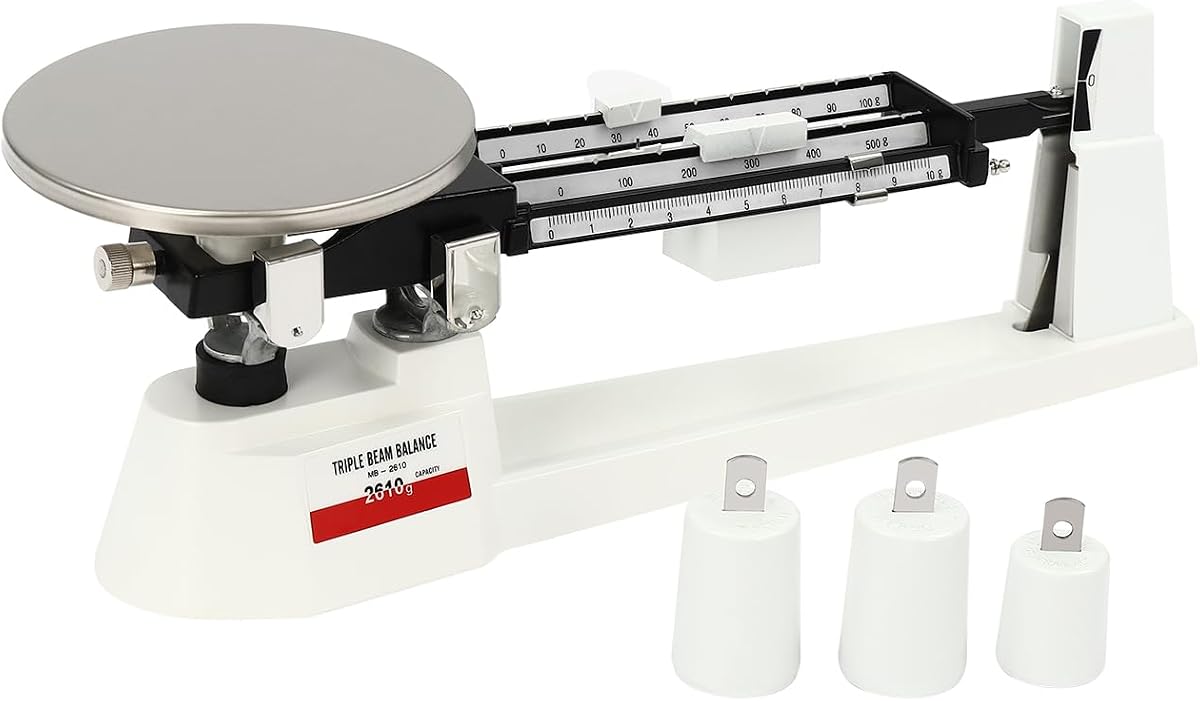
Triple Beam Scale 2610g x 0.1g
Stainless steel platform
Zero adjustment knob
Compact design size
This guide compares the top 10 mechanical balance scales for labs and classrooms, evaluating accuracy, durability, and ease of use for precise weighing.
Finding the right mechanical balance is essential for accurate measurements in educational and professional settings. These devices provide reliable weight readings without needing batteries, ensuring consistent performance over time.
We compared ten highly-rated models based on capacity, precision, build quality, and user feedback. Our analysis highlights key features like magnetic damping and zero adjustment to help you choose wisely.
Each pick showcases unique strengths for different needs, from classroom teaching to industrial use. Note that prices may change, so verify current listings before making your final purchase decision.

4.4Editor score

4.4Editor score
Here is a side-by-side comparison of all ten mechanical balances, highlighting their key specifications and ideal use cases for your specific needs.


This mechanical balance offers reliable precision with a 2610g capacity and 0.1g resolution. It is widely praised for its sturdy construction and ease of use in labs.
We may earn a commission when you buy through this link, at no additional cost to you.
Key strengths include built-in magnetic damping for quick stabilization and a clear, easy-to-read display. The included weights extend capacity significantly for versatile applications.
Trade-offs involve potential need for recalibration after shipping and its weight, which limits portability. These are acceptable given its robustness and accuracy.
Ideal for school labs and professional settings requiring consistent measurements. We recommend this for users needing a dependable, long-term weighing solution.
Magnetic damping ensures the pointer settles quickly for faster results without sacrificing accuracy.
Included weights increase total capacity up to 2610g, making it suitable for heavier samples.
We may earn a commission when you buy through this link, at no additional cost to you.
An affordable option with a 2610g capacity and 0.1g accuracy, this scale features a durable stainless steel platform. It is designed for reliable performance in various environments.
We may earn a commission when you buy through this link, at no additional cost to you.
Its zero adjustment knob reduces systematic errors and magnetic damping speeds up measurements. The compact size ensures it fits easily on desks or counters.
Though it may need initial calibration, its build quality and low cost make it an excellent entry-level choice. The stainless steel tray is easy to clean.
Best for classrooms or small businesses needing accurate weighing without high expenses. This is a practical choice for routine measurements.
The stainless steel platform resists corrosion and is easy to wipe down after use.
A threaded knob allows stable finger positioning during zeroing to prevent slippage.
We may earn a commission when you buy through this link, at no additional cost to you.
This professional medical scale handles up to 390lb with 1/4lb graduations, built with alloy steel for longevity. It is designed for high-use clinical environments requiring durability.
We may earn a commission when you buy through this link, at no additional cost to you.
The powder-coated finish protects against rust, and the non-slip platform mat ensures patient safety. An optional wheel set enhances mobility for larger clinics.
While the price is higher, the 10-year warranty and robust construction justify the investment. It is ideal for physician offices and hospitals.
Recommended for medical professionals needing a reliable, heavy-duty balance. This model offers the best combination of capacity and durability.
Powder-coated finish inside and out ensures rust protection in busy clinical settings.
Non-slip black platform mat provides stability and comfort during weighing.
We may earn a commission when you buy through this link, at no additional cost to you.
Designed for school labs, this balance provides 2610g capacity with 0.1g accuracy. It includes weights and a zero adjustment knob for easy learning.
We may earn a commission when you buy through this link, at no additional cost to you.
Magnetic damping keeps the pointer balanced for quick results. Clear graduations make it easy for students to read measurements accurately.
Transportation may require recalibration, and its rating is lower. These issues are common for mechanical devices and manageable with care.
Best for teaching weight concepts in classrooms or kitchens. It offers a simple, effective way to demonstrate measurement principles.
No battery requirement allows students to focus on mechanical principles without tech distractions.
Reduces sway for quick stable readings, saving time during experiments.
We may earn a commission when you buy through this link, at no additional cost to you.
This scale measures up to 200g with 0.2g precision, ideal for small samples in educational settings. It is compact and lightweight for easy transport.
We may earn a commission when you buy through this link, at no additional cost to you.
A weight set is included, featuring sizes like 5g and 100g. High-grade materials withstand frequent handling in classrooms.
Its lower capacity and precision limit use to light objects. However, its portability makes it a great supplementary tool for teachers.
Recommended for quick, small-scale weighing in science labs or home use. It is easy to store and move between rooms.
Lightweight design allows easy storage in lab cabinets or transport between classes.
Comes with multiple weight sizes for flexible measurement demonstrations.
We may earn a commission when you buy through this link, at no additional cost to you.
A trusted brand, this balance offers 610g capacity and 0.1g readability with metal beams. It features built-in magnetic damping for productivity.
We may earn a commission when you buy through this link, at no additional cost to you.
The zero adjust compensator is spring-loaded for fine modifications. Base and beams are made of metal for classroom durability.
Though capacity is lower than others, its brand reputation and precision appeal to professionals. The stainless steel plate is easy to clean.
Ideal for labs needing a reliable, branded mechanical balance. It is a solid choice for consistent, repeatable results.
Notched and tiered beams help ensure accurate, repeatable readings every time.
Fine modifications allow precise calibration for sensitive measurements.
We may earn a commission when you buy through this link, at no additional cost to you.
Made with stainless steel, aluminum alloy, and zinc, this scale is durable and stable. It serves electronics, agriculture, and textiles with 0.1g accuracy.
We may earn a commission when you buy through this link, at no additional cost to you.
Clear weight range marks make usage reassuring, and the 6-inch tray simplifies item placement. It works without batteries, ensuring convenience.
Though lacking ratings, its material build and versatility are strong selling points. It is designed for various professional weighing needs.
Best for industries requiring a tough, adaptable mechanical balance. It offers reliable performance for diverse weighing tasks.
Stainless steel, aluminum alloy, and zinc ensure stable properties and long service life.
Suitable for schools and industries, increasing capacity efficiently with included weights.
We may earn a commission when you buy through this link, at no additional cost to you.
This lightweight lab scale holds 2610g with 0.1g accuracy and a stainless platter. It earns a perfect 5.0 rating for its ease of use.
We may earn a commission when you buy through this link, at no additional cost to you.
Made of durable materials, it applies to food, medical, and research industries. Its small size ensures it won't take up much space.
The lightweight design is convenient for moving between desks or kitchens. Zero adjustment reduces systematic errors for precise results.
Ideal for users needing a highly-rated, portable balance. It offers convenience without sacrificing accuracy or durability.
Suitable for food, medical, agriculture, and scientific research weighing needs.
Small dimensions allow easy placement on desks and convenient movement.
We may earn a commission when you buy through this link, at no additional cost to you.
This classic apparatus offers 610g capacity with a stainless steel pan and offset beams. It is designed for visual and tactile learning.
We may earn a commission when you buy through this link, at no additional cost to you.
Spring-loaded zero adjust and magnetic damping ensure stable readings. The corrosion-resist aluminum frame supports long-term laboratory use.
Though lower in capacity, its design is great for professional labs and classrooms. The offset beams allow an unobstructed view.
Best for educators teaching precise mass determination. It is a sturdy, reliable choice for hands-on experiments.
Ideal for teaching students how to determine the mass of an object precisely.
Beams offset from one another provide an unobstructed vertical view.
We may earn a commission when you buy through this link, at no additional cost to you.
Offering 2610g capacity and 0.1g precision, this scale has a corrosion-resistant stainless steel pan. It includes weights for extended measurement range.
We may earn a commission when you buy through this link, at no additional cost to you.
Magnetic damping stabilizes the pointer quickly for fast readings. A clear scale ensures easy, accurate weight readings every time.
Though it relies on calibration, its accuracy and battery-free operation are benefits. The 6-inch platform is perfect for various materials.
Ideal for laboratories needing repeatable measurements without electronics. It provides reliable performance for a variety of settings.
Built to last, the stainless steel pan resists corrosion and is easy to clean.
Built-in magnetic damping stabilizes the pointer, minimizing sway and time.
We may earn a commission when you buy through this link, at no additional cost to you.
Selecting the right mechanical balance requires considering several factors to ensure accuracy and durability for your specific needs.
Determine the maximum weight you need to measure and the required accuracy level. Higher capacity models like 2610g offer versatility, while 0.1g precision ensures detailed measurements.
Choose a capacity that exceeds your typical sample size and precision that meets your application standards.
Look for scales with stainless steel platforms and durable alloy frames to resist corrosion and wear. High-grade materials ensure the balance remains stable over years of use.
Prioritize stainless steel and coated aluminum for long-term durability in lab or industrial settings.
A reliable mechanical balance should have a zero adjustment knob to reset the scale before each use. This feature helps reduce systematic errors and ensures accuracy.
Ensure the balance includes a stable zero adjustment mechanism for consistent, error-free readings.
Consider the physical dimensions and weight of the balance if you need to move it between rooms. Compact, lightweight designs are ideal for classrooms or mobile labs.
Opt for lightweight models with smaller footprints if storage space and transport are concerns.
Built-in magnetic damping systems stabilize the pointer quickly, speeding up the measurement process. This feature is crucial for high-productivity environments where time matters.
Choose models with magnetic damping for faster, more efficient weighing sessions.
Check if the balance comes with a complete set of weights and trays. Included weights extend capacity and reduce the need for additional purchases.
Ensure the package includes necessary weights and trays for immediate use without extra costs.
Some models offer multi-year warranties, which can protect against manufacturing defects. A strong warranty indicates the manufacturer's confidence in the product.
Look for warranties that provide peace of mind and cover repair or replacement needs.
Mechanical balances typically do not require batteries, making them reliable during power outages. This eco-friendly feature ensures consistent operation anywhere.
Select battery-free models for dependable performance without reliance on external power sources.
Always place the balance on a flat, stable surface and adjust the zero knob before weighing. Ensure the pointer is aligned with the zero mark for accurate readings.
Gently place your sample on the center of the pan and avoid overloading beyond the maximum capacity. Record measurements by reading the positions of all three sliding weights.
Clean the pan regularly with a soft cloth and mild solution to prevent residue buildup. Store the balance in a dry place and recalibrate if moved or bumped.
Mechanical balances use sliding weights and beams to determine mass, offering reliability without batteries. Digital balances use electronic sensors and provide faster digital readouts but depend on power.
Yes, mechanical balances often need calibration after shipping or movement to ensure accuracy. Use the zero adjustment knob and known weights to verify and adjust readings.
Yes, if the pan is suitable for holding containers with liquids. Ensure the container is stable and the balance capacity supports the total weight of liquid and vessel.
Wipe the stainless steel pan with a soft cloth and mild cleaner. Avoid harsh chemicals and ensure the balance is dry before storage to prevent corrosion.
For most classroom science experiments, a 610g to 2610g capacity is sufficient. Consider the types of samples your students will weigh to select the right range.
Mechanical balances are better for durability and battery-free use, while digital offer convenience and speed. The best choice depends on your need for reliability versus speed.
Magnetic damping reduces pointer swing for faster stabilization and more efficient weighing. It minimizes the time needed to get a stable, accurate reading.
Most mechanical balances offer accuracy ranging from 0.1g to 0.2g. High-precision models provide 0.1g resolution suitable for laboratory and analytical applications.
Our top picks include the MB2610 for overall performance, the Triple Beam Scale for value, and the Health o meter for professional medical use. Each excels in specific scenarios.
Prioritize capacity and build quality based on your environment, whether a classroom or industrial lab. Magnetic damping and zero adjustment are key features to look for.
Remember to check current prices and availability before purchasing to ensure you get the best deal. Select the model that fits your accuracy and durability needs.