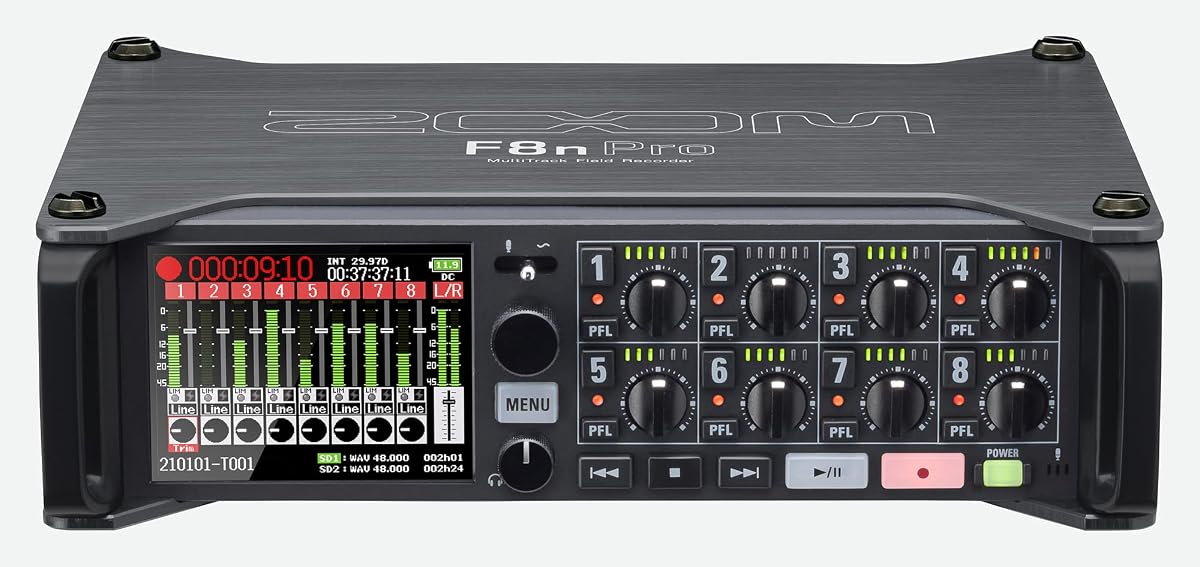
Zoom F8n Pro Field Recorder
4.6Editor score
8-channel 10-track
Dual SD card slots
High gain preamps
Timecode accuracy
Discover the top 10 Audio Field Recorders for Film in October 2026. This guide compares features, sound quality, and workflow tools for filmmakers.
Capturing pristine sound is just as vital as shooting crisp visuals in modern filmmaking. Audio field recorders empower creators to record dialogue, ambiance, and effects with professional fidelity. Choosing the right device ensures your story is heard clearly without technical distractions.
We evaluated ten leading recorders based on input flexibility, timecode sync, and recording fidelity. Each model was assessed for real-world usability on sets and in the field. Our analysis highlights tools that balance portability with robust feature sets for diverse projects.
Each pick below details key specs, strengths, and ideal use cases to help you decide. Note that availability and pricing fluctuate frequently based on market demand and retailer stock. Always verify current offers before committing to a purchase for your production needs.
4.6Editor score

4.7Editor score

4.5Editor score
The following table provides a side-by-side comparison of all ten selected Audio Field Recorders for Film. It highlights essential specifications like input types, recording bit depth, and connectivity options to help you identify the most suitable tool for your specific workflow.



The Zoom F6 stands out as a top contender for professional filmmakers needing robust audio capture. With a high rating from users, it delivers 32-bit float recording that prevents clipping during unpredictable sound spikes. This device is built to handle everything from whisper-quiet dialogue to loud explosions without distortion.
We may earn a commission when you buy through this link, at no additional cost to you.
Its six XLR inputs allow simultaneous recording of multiple microphones, which is essential for complex dialogue scenes. The built-in timecode I/O ensures frame-accurate sync with video cameras, streamlining post-production significantly. The ultra-low-noise preamps guarantee clean audio even in noisy environments like wind or traffic.
While the price is higher than entry-level models, the reliability and flexibility justify the investment for serious projects. The device is rugged enough for location work but compact enough to travel easily with a crew. Users appreciate the ability to use it as a standalone recorder or a USB interface for computers.
If you are shooting narrative films, documentaries, or high-end corporate content, the F6 is an ideal choice. It balances portability with professional-grade features that ensure you never miss a critical take due to technical limitations. Investing in this recorder now will serve you well for years of production.
The 32-bit float capability captures soft whispers and loud blasts in one pass without gain adjustments. This reduces the risk of ruining a take due to input levels being set incorrectly during a scene.
Frame-accurate timecode input and output keep audio and video perfectly aligned during editing. This is crucial for multi-camera shoots or when using separate recording devices for sound and picture.
We may earn a commission when you buy through this link, at no additional cost to you.
The Zoom F8n Pro represents the pinnacle of field recording technology for demanding professional environments. It offers eight channels of input and ten tracks of recording, making it perfect for large production sets. The dual SD card slots provide redundant recording, ensuring no data is lost even if one card fails.
We may earn a commission when you buy through this link, at no additional cost to you.
High-quality preamps deliver 75dB of gain and low noise floors, allowing you to capture pristine dialogue from distance mics. The industry-leading timecode accuracy keeps your audio perfectly aligned with picture for days on end without drift. It also functions as a powerful USB audio interface for computer-based workflows.
While it is heavier than pocket recorders, the extra capacity and reliability are worth the weight for full productions. The menu system is detailed, offering deep control over every aspect of the recording process. Users value the option to split tracks and manage complex mixes directly on the unit.
If you are leading sound departments on feature films or TV series, the F8n Pro is the tool to trust. It provides the flexibility to handle large casts and intricate audio setups without compromising quality or workflow. This is a long-term investment that pays off in professional results and peace of mind.
Recording to two SD cards simultaneously creates a backup copy instantly. This prevents catastrophic data loss during critical scenes where taking a second take is not possible.
Eight inputs allow you to connect lavaliers, boom mics, and ambient mics all at once. This versatility supports complex setups without needing external mixers or splitters.
We may earn a commission when you buy through this link, at no additional cost to you.
The Zoom H1 XLR brings professional-grade features to a much lower price point, making it ideal for indie creators. It supports 32-bit float recording, ensuring you can capture safe audio without worrying about clipping levels. The OLED display gives you a clear visual of your levels so you never record into the red.
We may earn a commission when you buy through this link, at no additional cost to you.
With two XLR/TRS combo inputs, you can connect high-quality microphones directly without needing adapters. The device records to SDXC cards up to 1TB, offering ample space for long shooting days. Its compact size fits easily into a camera bag or backpack, making it great for run-and-gun shooting.
The trade-off is the lack of timecode output and limited inputs, but these are acceptable for many solo or small projects. It delivers excellent sound quality that rivals much more expensive devices in its class. Users appreciate the simple layout that gets you recording quickly without navigating complex menus.
If you are on a tight budget but need reliable audio for short films, interviews, or web content, this is the pick. It offers a massive step up from camera audio or phone recorders at a fraction of the cost. This is the most cost-effective way to get professional sound into your workflow.
32-bit float recording means you can adjust levels after the fact without quality loss. This is a game changer for creators who cannot monitor audio perfectly while shooting.
The small form factor allows you to mount it directly on a camera rig. You get professional audio without adding significant bulk to your gear setup.
We may earn a commission when you buy through this link, at no additional cost to you.
The Zoom F3 is designed for run-and-gun filmmakers who need pro audio in a compact package. It utilizes 32-bit float recording to capture dialogue and sudden peaks without needing constant level adjustments. The dual locking XLR inputs keep connections secure even when the device is mounted out of reach.
We may earn a commission when you buy through this link, at no additional cost to you.
Ultra-low-noise preamps ensure clean audio even in demanding environments where background noise is present. Flexible power options allow you to run it on batteries or USB power for long days on set. It works seamlessly with larger setups or as a standalone recorder for simple interviews.
While it only has two inputs, this is often sufficient for boom and lav setups on smaller productions. The lack of internal mics encourages the use of external quality microphones for better results. Users value the reliability and durability of the build for daily professional use.
This recorder is perfect for documentary shooters or event videographers who need to move quickly. It ensures you do not miss critical audio due to clipping or connection issues while on the move. The F3 offers a balanced approach between size and professional audio capabilities for your needs.
The locking XLR inputs prevent cables from disconnecting during movement. This is essential for handheld shots or when the device is mounted on a camera.
You can power the device via batteries or USB for extended recording sessions. This flexibility ensures you stay operational during long location shoots without worry.
We may earn a commission when you buy through this link, at no additional cost to you.
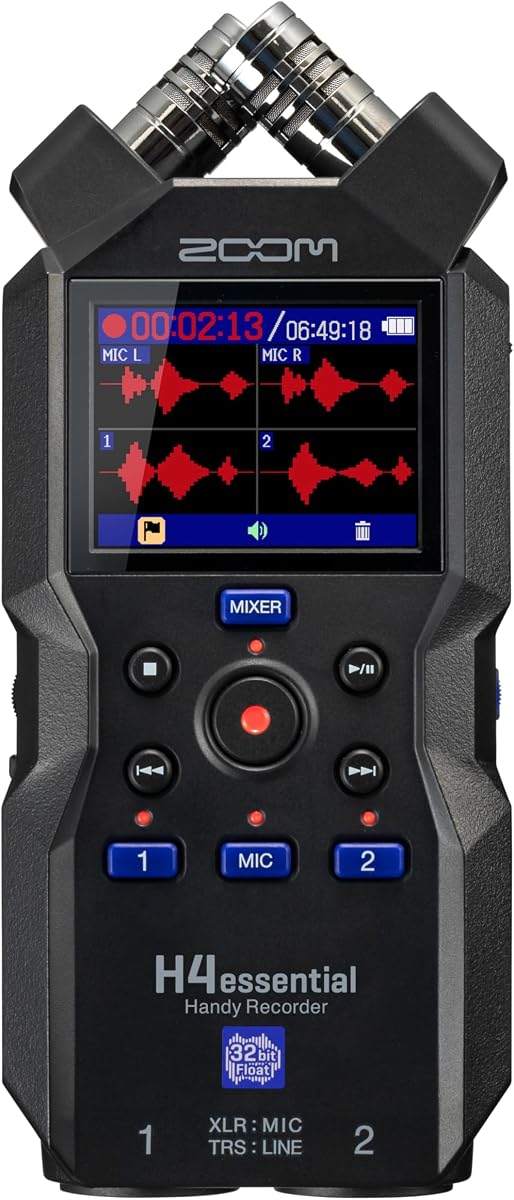
The Zoom H4 Essential allows you to capture bigger projects with confidence using its four-track recording capability. You can use the built-in stereo microphones or connect external gear via two XLR/TRS inputs. It offers clear sound for creative work, making it suitable for interviews and field recording.
We may earn a commission when you buy through this link, at no additional cost to you.
Connectivity is enhanced by USB-C support, allowing you to record directly to your phone or computer. This makes it easy to stream audio or create backups instantly while working. The spoken menu guidance makes the device accessible and easier to navigate for all users.
While it lacks advanced timecode features, it covers the basics well for independent filmmakers and podcasters. The flexibility to use internal or external mics adds convenience depending on the shooting environment. Users find it reliable for capturing detailed audio without needing complex setups.
If you need a versatile tool that bridges the gap between a basic recorder and a professional unit, this fits. It is ideal for creators who need to adapt quickly to different sound scenarios on set. The H4 Essential delivers quality and features that support a wide range of content creation.
Switch between built-in stereo microphones and external XLR mics as needed. This versatility reduces the need to carry extra gear for different recording scenarios.
USB-C allows for direct connection to mobile devices for easy streaming or recording. This simplifies workflows for content creators who work on mobile platforms.
We may earn a commission when you buy through this link, at no additional cost to you.
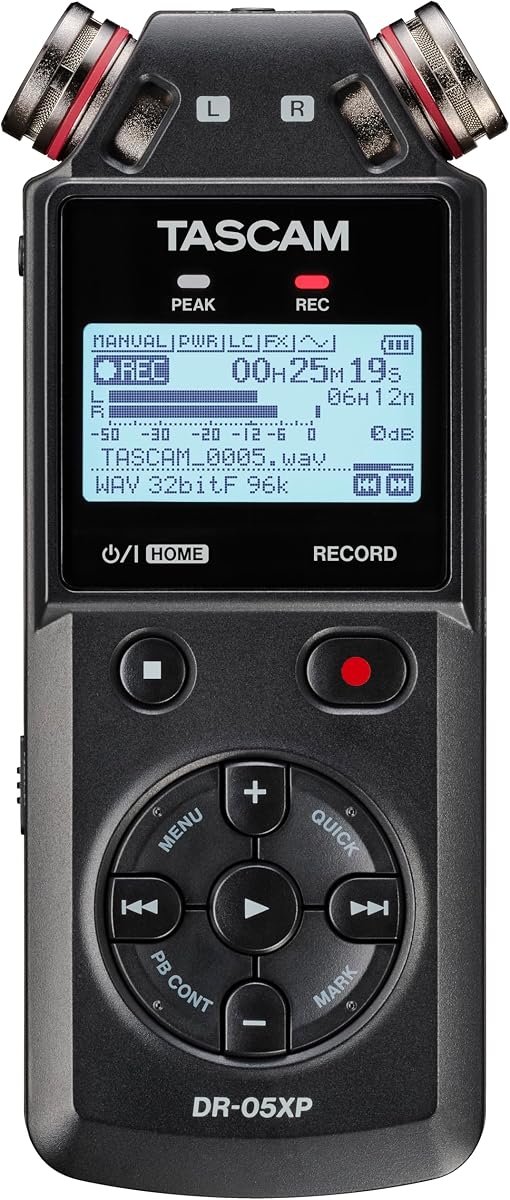
The TASCAM DR-05XP is an excellent entry-level option for those starting out in film audio. It features 32-bit float recording and flexible modes including MP3 and various sampling rates. The built-in omnidirectional condenser microphones can handle loud environments without distortion.
We may earn a commission when you buy through this link, at no additional cost to you.
USB-C connectivity turns it into an audio interface for computers, enabling direct recording without extra cables. The battery life supports up to 17.5 hours of operation, which is great for all-day shoots. Its portable design makes it easy to carry in a pocket or small bag.
The lack of XLR inputs limits professional microphone use, but it works well for ambient sound or backup. It is a solid tool for capturing raw sound or for budget-conscious creators needing reliable performance. Users appreciate the straightforward interface that allows for quick operation in the field.
This recorder is best for beginners or as a secondary device for capturing ambient sounds on set. It provides a low-cost entry point into high-quality recording formats like 32-bit float. The DR-05XP offers significant value for the price while delivering clean audio performance for basic needs.
The long battery life ensures you can record throughout the day without frequent changes. This is helpful for long interviews or outdoor sessions where charging is difficult.
The layout is designed for quick operation without complex menus. You can start recording almost immediately, which is ideal for catching spontaneous moments.
We may earn a commission when you buy through this link, at no additional cost to you.
The Zoom H5 is renowned for its system of interchangeable input capsules that adapt to different recording needs. It includes a detachable X/Y capsule and features two mic/line inputs with phantom power options. Four-track simultaneous recording allows for detailed capture of complex audio scenes.
We may earn a commission when you buy through this link, at no additional cost to you.
Safety net recording protects against accidental clipping by keeping a backup track. The device runs on 2 AA batteries and records directly to SD cards. It serves as a multichannel USB interface for computers and mobile devices with loop back function.
While it is an older model compared to newer float recorders, its modularity remains a huge advantage. The ability to swap capsules means you can customize the device for stereo or midside recording easily. Users love the robust build and the flexibility it offers for various audio tasks.
If you need a versatile tool that can adapt to changing sound environments, the H5 is a strong choice. It is perfect for field recording and interviews where flexibility is more important than timecode sync. The H5 remains a classic for a reason due to its enduring performance and utility.
Swapping capsules allows you to change mic patterns without buying new mics. This flexibility saves money and adapts the unit to different recording styles.
A lower level safety track ensures you never lose a take due to clipping. This safety feature is crucial for critical moments where re-recording is impossible.
We may earn a commission when you buy through this link, at no additional cost to you.
The TASCAM DR-10L Pro is specialized for capturing superior personal audio with an included lavalier mic. It supports LTC Jam Sync for seamless timecode synchronization in multi-device setups. The 32-bit float recording captures every whisper and scream with high fidelity and safety.
We may earn a commission when you buy through this link, at no additional cost to you.
It supports high-capacity microSDXC cards and allows wireless timecode syncing with specific adapters. You can control up to five simultaneous recordings using the connected app for multi-cam shoots. The TM-10L mic is designed to be discreet and deliver lifelike audio in busy settings.
While limited to single channel recording, it excels at capturing clean dialogue without intrusive equipment. The device is designed to be hidden under clothing or a subject without drawing attention. Users value the simplicity and reliability for interviews and documentary work where stealth is needed.
This recorder is ideal for journalists and filmmakers who need to capture clean dialogue discreetly. It removes the hassle of carrying external lav mics and recorders separately for solo shoots. The DR-10L Pro offers a complete solution for personal audio recording on the go.
LTC Jam Sync allows you to align audio with camera timecode accurately. This feature streamlines post-production by reducing manual sync efforts.
The unit is small enough to hide under clothing for unobtrusive recording. This ensures you capture natural sound without making the subject feel watched.
We may earn a commission when you buy through this link, at no additional cost to you.
The Zoom H1 Essential is perfect for creators who need simple and easy recording without technical complexity. It captures clear stereo audio for videos and tutorials with built-in microphones. The USB-C connection allows you to use it as a mic for livestreams or remote meetings.
We may earn a commission when you buy through this link, at no additional cost to you.
It is designed to capture real-world sound like nature or travel audio without worrying about levels. The controls are straightforward, allowing you to start recording instantly when inspiration hits. It is lightweight and fits easily in any pocket or bag for everyday use.
While it lacks external inputs, it serves well for basic needs and casual content creation. The built-in mics provide natural stereo sound that improves on-camera audio significantly. Users appreciate the simplicity and low cost for everyday content generation tasks.
If you need a simple recorder for quick interviews or ambient sound, this is a solid option. It is also great for capturing ideas on the go without fiddling with settings. The H1 Essential delivers a straightforward solution for those who want to focus on content.
The simple interface allows you to start recording instantly without complex menus. This is ideal for capturing spontaneous moments that happen quickly.
Using it as a USB mic for calls or streaming adds extra utility. This feature makes it versatile for digital communication as well.
We may earn a commission when you buy through this link, at no additional cost to you.
The Zoom F2 is the smallest 32-bit float recorder you can wear, perfect for discreet dialogue. It captures clip-free audio at any volume without needing to adjust gain during shoots. The included lavalier mic is ready to go with windscreen and secure clip for interviews.
We may earn a commission when you buy through this link, at no additional cost to you.
It runs up to 15 hours on two AAA batteries, making it one of the most efficient recorders available. The precision clock ensures perfect sync for professional film production needs. The REC hold switch prevents accidental stops during critical recordings to protect your data.
The screen is tiny, which makes monitoring levels hard, but the float recording mitigates this risk. It is ideal for solo creators who need a reliable audio source in their pocket. Users value the reliability and battery life for long days of shooting.
If you need a hidden recorder that ensures safety with float recording, this is a great tool. It is particularly good for documentary and run-and-gun shoots where size matters. The F2 offers a reliable solution for capturing clean audio without distraction on set.
32-bit float ensures you can recover audio even if levels are set wrong. This is critical for situations where you cannot monitor sound continuously.
The 15-hour runtime supports full production days on a single charge. This efficiency reduces the need for carrying multiple batteries or chargers.
We may earn a commission when you buy through this link, at no additional cost to you.
Selecting the right audio field recorder involves balancing budget, input needs, and workflow requirements. Understanding key specifications will help you avoid overspending or underdelivering on your production sound needs.
The number of inputs you need depends on your typical shoot. Single channel recorders suit simple interviews, while multi-input units are essential for full production sets.
Choose a device with enough XLR inputs to connect all your microphones simultaneously.
32-bit float recording captures a massive dynamic range without clipping. This technology allows you to adjust audio levels after recording without quality loss.
Prioritize recorders with float support to ensure you never lose critical takes due to bad gain settings.
Timecode allows your audio to sync perfectly with video footage automatically. This is vital for professional workflows to avoid manual sync in post-production.
Look for devices with Timecode In and Out ports if you work with separate camera sound.
A portable recorder fits easily into camera bags and allows for flexible positioning. Heavy units might limit your ability to mount the device in tight spots.
Consider how much weight you can handle daily before committing to larger professional units.
Long battery life is crucial for extended shoots without frequent changes or charging. Look for devices with rechargeable options or standard battery support.
Ensure the device supports USB power for continuous operation if needed.
High-quality audio files can consume significant storage space. Ensure your device supports large capacity SD cards like 512GB or 1TB.
Dual SD card slots add redundancy to prevent data loss if a card fails.
Field recording often happens in harsh environments. A rugged build ensures your gear survives drops and weather conditions.
Invest in devices with secure locking inputs and durable casing for peace of mind.
Always check your input levels and battery status before rolling camera. Ensure the SD card is formatted and has enough space to record.
Store your recorder in a padded case when not in use to protect delicate components from impact or dust.
Regularly update firmware to access new features and maintain optimal performance for your device.
Yes, it provides safety against clipping and allows post-level adjustments. It simplifies the workflow by removing the stress of perfect gain staging during shoots.
Timecode is not strictly necessary for indie films but highly recommended for multi-cam setups. It saves time in post-production syncing efforts significantly.
Many modern recorders function as USB audio interfaces for computers. This allows them to be used for streaming or direct recording to software.
For long shoots, 512GB is a safe minimum. High-quality uncompressed audio takes up space, so having larger capacity avoids interruptions.
Yes, most handheld models record stereo by default. Professional units allow multi-channel recording depending on your input configuration.
AA alkaline batteries are convenient for field use, but rechargeable Li-Ion options are cost-effective long term. Choose based on your location access to charging.
Most recorders are not waterproof, but some are weather-resistant. Always check the specifications before using in rain or high humidity environments.
The Zoom F6 and F8n Pro stand out for professional versatility, while the H1 XLR offers budget-friendly quality. Each device caters to specific production scales and needs within the filmmaking world.
Prioritize features like 32-bit float and timecode sync if you plan on serious production work. For beginners, simpler handheld units provide excellent quality at lower costs.
Always verify current pricing and availability as offers change regularly online. This ensures you get the best value for your investment when purchasing equipment.