
Nano V3.0 Board ATmega328P/CH340G Chip Microcontroller Kit
4.5Editor score
ATmega328P with CH340G Chip
USB-C Port Included
Complete Kit with Cables
This guide compares the top Arduino Nano Board models for 2026, highlighting features, compatibility, and performance for makers and professionals alike.
The Arduino Nano Board remains a cornerstone of modern electronics prototyping, offering a compact form factor that fits seamlessly into tight spaces while delivering robust performance for diverse projects. Its small size belies the powerful microcontroller at its heart, enabling everything from simple LED blink tests to complex sensor networks and robotic control systems.
To compile this comprehensive guide, we evaluated ten leading Nano board options based on compatibility, build quality, feature sets, and user feedback. We considered factors such as microcontroller type, connectivity options like USB-C versus mini-USB, and the availability of headers for easy breadboarding without soldering requirements.
Each pick in this list showcases specific strengths tailored to different user needs, from budget-conscious beginners to advanced developers seeking modern connectivity. Please note that product availability and pricing can fluctuate regularly, so verify current details before making your final purchase decision for your specific application.
4.5Editor score
4.6Editor score

4.6Editor score
The following table provides a side-by-side comparison of the top ten Nano boards, detailing key specifications such as microcontroller type, memory capacity, connectivity ports, and unique features to help you choose the right model for your specific project requirements.


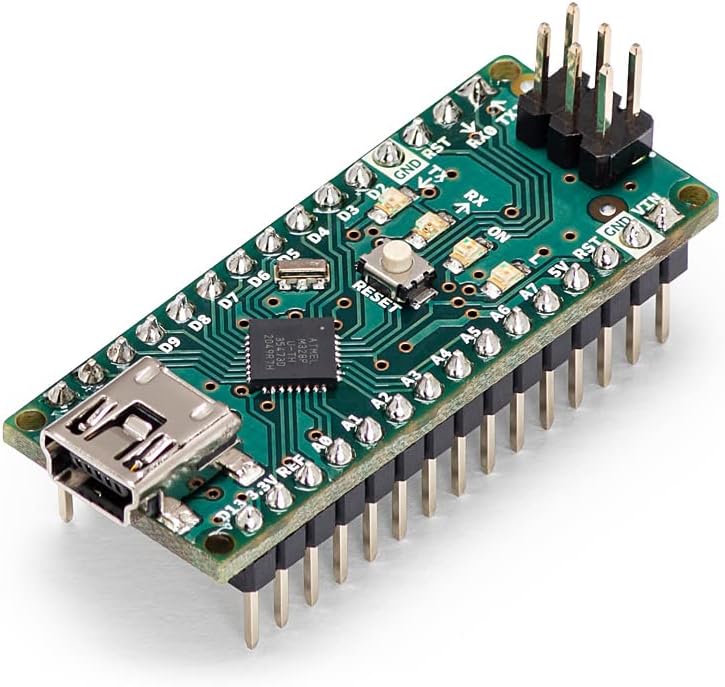
The Arduino Nano [A000005] stands out as the definitive choice for users seeking a balance of authenticity and performance. With a 4.6 rating from thousands of users, this board delivers the exact specifications expected from the official Arduino ecosystem, ensuring compatibility with thousands of shields and libraries.
We may earn a commission when you buy through this link, at no additional cost to you.
Key strengths include its robust ATmega328P microcontroller, which provides sufficient processing power for most embedded applications. The 14 digital I/O pins and 8 analog inputs allow for versatile sensor integration, while the built-in mini-USB port simplifies programming and power delivery without additional adapters.
Honest trade-offs involve the need to solder headers for breadboard use in some cases and the reliance on an older mini-USB standard rather than modern USB-C. These are acceptable given the board's proven stability and the vast resource available for troubleshooting and learning.
This board is ideal for students, hobbyists, and professionals who value official support and documentation. If you want a reliable foundation for your next electronics project without compatibility headaches, this original Nano is the top recommendation for the vast majority of users.
Being an official Arduino product ensures seamless integration with shields and libraries designed for the Nano form factor, reducing debugging time significantly.
Its small physical footprint makes it perfect for wearable electronics and portable devices where space is at a premium without sacrificing functionality.
We may earn a commission when you buy through this link, at no additional cost to you.
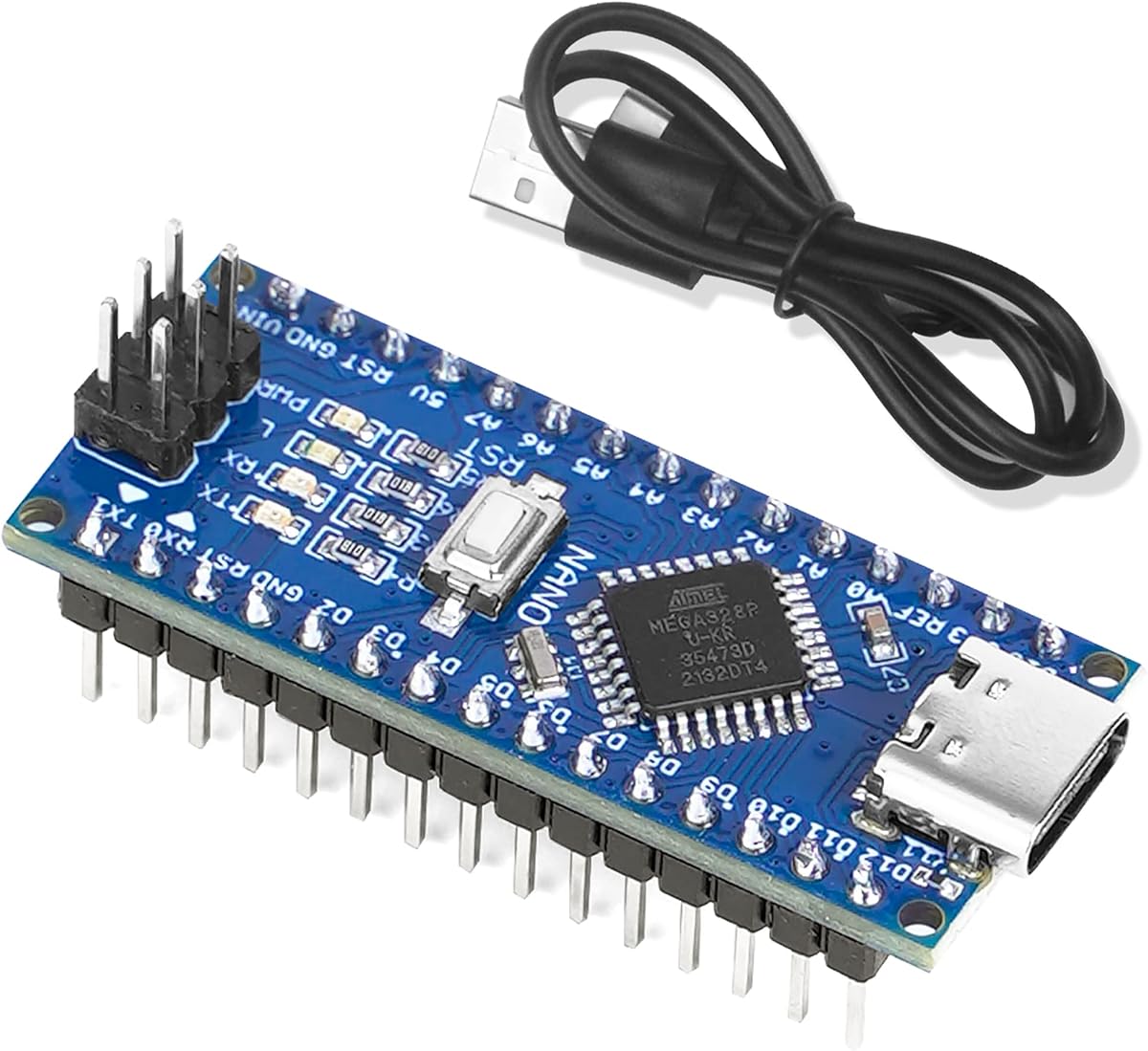
The Nano V3.0 Board ATmega328P/CH340G Microcontroller Kit offers exceptional value for beginners who need multiple units for classroom projects or prototyping iterations. With a 4.5 rating, this kit provides two boards plus cables, making it one of the most cost-effective entries on our list without sacrificing core functionality.
We may earn a commission when you buy through this link, at no additional cost to you.
It features the proven ATmega328P microcontroller paired with the CH340G USB chip, which ensures broad compatibility across Windows, Mac, and Linux systems. The inclusion of USB-C ports modernizes the connection experience, allowing for faster data transfer and easier integration with current computers.
Potential trade-offs include the generic nature of the manufacturer, which might result in slight variations in build quality compared to official boards, and occasional driver setup steps. However, these are minor inconveniences given the significant price savings and the robust community support for CH340 drivers.
This kit is perfect for educators, students, or hobbyists who need spare boards for experimentation. If you are looking to build multiple projects simultaneously or need a low-cost entry point into Arduino development, this bundle delivers the best bang for your buck.
The USB-C port allows you to use modern cables, future-proofing your setup and ensuring compatibility with newer laptops and power banks.
Buying in bulk reduces the cost per unit significantly, enabling you to stock up for multiple projects or classroom sets without overspending.
We may earn a commission when you buy through this link, at no additional cost to you.
The Arduino Nano ESP32 represents the cutting edge of the Nano family, blending the familiar form factor with the power of the ESP32-S3 chip. Rated 4.6 by users, this board is designed for those ready to dive into IoT applications requiring wireless connectivity without needing external modules.
We may earn a commission when you buy through this link, at no additional cost to you.
Its standout features include integrated Wi-Fi and Bluetooth 5.0, enabling seamless communication with cloud platforms and mobile devices. The dual-core processor running at 240MHz offers substantial performance headroom for complex tasks like voice recognition or machine learning at the edge.
Trade-offs involve the board's voltage requirements and slightly different current draw compared to classic ATmega boards, which may require adjustments in power supply design. These are acceptable compromises for the immense capability gains in connectivity and processing speed offered by the ESP32 architecture.
This board is ideal for advanced makers working on smart home devices, wearables, or connected sensor networks. If you need wireless capabilities natively and want the convenience of MicroPython for rapid prototyping, this is the premium choice for modern embedded projects.
Having Wi-Fi and Bluetooth built-in eliminates the need for separate shield modules, simplifying your circuit and reducing the total component cost.
MicroPython compatibility allows developers to write code in a more accessible language, speeding up development cycles for educational or rapid projects.
We may earn a commission when you buy through this link, at no additional cost to you.
The Arduino Nano Every delivers a significant performance upgrade over the classic Nano through its ATmega4809 microcontroller. Rated 4.6 by users, it retains the familiar Nano form factor while offering more memory and faster processing for more demanding embedded applications.
We may earn a commission when you buy through this link, at no additional cost to you.
Key strengths include 48KB of flash memory and 6KB of SRAM, allowing for larger and more complex programs without memory management issues. The USB-C port ensures modern connectivity, and its efficiency makes it suitable for battery-powered projects where power consumption is critical.
While it shares many design traits with the original Nano, the newer architecture requires users to verify compatibility with specific older libraries or shields. This is a minor adjustment given the substantial gains in execution speed and memory availability for modern development tasks.
This board is suitable for developers transitioning from the original Nano who need more resources without changing their physical layout. If you require more RAM for data logging or complex logic, the Nano Every is the logical next step in the official lineup.
With nearly double the SRAM and more flash than standard Nano, this board handles larger codebases and data storage without external memory chips.
The improved power efficiency extends battery life in portable projects, making it a strong contender for remote sensor nodes and wearable tech.
We may earn a commission when you buy through this link, at no additional cost to you.
The ELEGOO Presoldered Nano Board USB-C kit offers immediate usability with three boards that come with headers already soldered. Rated 4.6 by users, this set eliminates the initial hurdle of soldering for beginners, allowing you to plug straight into a breadboard and start coding right away.
We may earn a commission when you buy through this link, at no additional cost to you.
It utilizes the classic ATmega328P microcontroller, ensuring compatibility with thousands of existing tutorials and libraries. The USB-C interface provides a modern connection standard, and the inclusion of a cable in the box ensures you have everything needed to begin your projects immediately.
Trade-offs include the need to install the CH340 driver if your system does not recognize the board automatically and the lack of native wireless capabilities. However, for wired projects and prototyping, the convenience of pre-soldered headers and multiple boards makes it an excellent value.
This kit is perfect for classrooms or home labs where you need multiple units ready for use without extra assembly time. If you value convenience and have a modest budget for a reliable multi-pack, this ELEGOO set is a top contender for ease of use.
With headers pre-soldered, you can insert the board directly into breadboards without risking bent pins or uneven connections during soldering.
Having three boards allows you to distribute them across different test setups or share with teammates without purchasing multiple separate kits.
We may earn a commission when you buy through this link, at no additional cost to you.
The 3PCS Nano V3.0 Board With Cable provides a practical quantity solution for users needing multiple units for various projects or experiments. With a 4.5 rating, these boards offer standard Nano functionality with the added convenience of USB-C ports for modern connectivity requirements.
We may earn a commission when you buy through this link, at no additional cost to you.
Each board features the ATmega328P MCU and CH340G chip, ensuring stable performance and broad OS support. The automatic power source detection allows switching between USB and external power seamlessly, simplifying wiring and reducing the need for manual jumpers.
Potential downsides include the generic branding which might vary slightly in component quality over batches, and the lack of soldered headers requiring assembly work. These factors are balanced by the low cost per unit and the reliable performance for most hobbyist applications.
This bundle is best suited for hobbyists building several projects at once or those who prefer having backups on hand. If you need a budget-friendly way to stock up on reliable boards with modern ports, this three-pack offers significant utility for the investment.
The board detects the highest voltage source and switches automatically, saving you from wiring errors and simplifying external power supply setups.
Compatible with Windows, Mac, and Linux, this board ensures you can develop on your preferred system without needing additional software layers.
We may earn a commission when you buy through this link, at no additional cost to you.
The Nano V3.0 Board ATmega328P provides a robust foundation for classic Arduino projects with its improved CH340G chip replacing older USB converters. Rated 4.6 by users, this version ensures better stability and performance when uploading sketches compared to legacy models with FT232RL chips.
We may earn a commission when you buy through this link, at no additional cost to you.
It supports ISP download and USB download methods, giving developers flexibility in how they program the device. The compact design fits standard breadboard rows perfectly, making it easy to test circuits before moving to a custom PCB for production.
Trade-offs involve the lack of USB-C and the need to solder headers for breadboard usage. While it lacks the latest connectivity standards, its stability and compatibility make it a dependable choice for standard tasks that do not require high-speed data transfer.
This board is ideal for users prioritizing stability and cost-effectiveness for standard automation tasks. If you want a proven, reliable workhorse for your next sensor project or LED controller, this classic V3.0 model is a solid and safe bet.
The CH340G chip provides reliable serial communication reducing dropouts during programming sessions and ensuring consistent performance across platforms.
Designed to match original specifications, it works with the same IDE and libraries, ensuring you do not need to relearn development workflows.
We may earn a commission when you buy through this link, at no additional cost to you.
The Arduino Nano R4 with Headers brings a modern Renesas processor to the Nano form factor, delivering significant performance boosts. Rated 4.5 by users, it features 256KB flash and 32KB RAM, making it capable of handling complex logic and extensive libraries that older boards cannot support.
We may earn a commission when you buy through this link, at no additional cost to you.
The inclusion of a Qwiic connector allows for easy integration of sensors without complex wiring, which simplifies prototyping and production design. Pre-soldered headers mean you can use the board on breadboards immediately, streamlining the transition from prototype to final assembly.
Trade-offs include the departure from the AVR architecture to Renesas, which may require library updates or different build configurations. Additionally, its modern features are not backward compatible with older AVR-specific shields. This limits its use in legacy projects but excels in new development.
This board is perfect for production teams or engineers needing higher performance and modern debugging features. If you need a robust platform that supports advanced expansion connectors and high-speed processing, the Nano R4 is the recommended upgrade for new designs.
The Qwiic connector allows you to chain sensors easily with standardized headers reducing wiring errors and speeding up system assembly.
The programmable RGB LED helps visualize system states and errors during development making it easier to debug logic without extra hardware.
We may earn a commission when you buy through this link, at no additional cost to you.
The Arduino Nano R4 with loose pins offers a cost-effective entry into the powerful Renesas ecosystem. Rated 4.2 by users, this version allows for more flexible integration into custom designs thanks to its castellated edges that enable direct mounting onto custom PCBs.
We may earn a commission when you buy through this link, at no additional cost to you.
It maintains all the core features of the R4 including the Qwiic connector and programmable RGB LED, making it versatile for both prototyping and production. The loose pins give you the freedom to solder them exactly where you need them for specific project layouts.
Trade-offs involve the requirement for soldering skills and tools, which may not be suitable for beginners who prefer plug-and-play solutions. Additionally, the slightly lower rating reflects user learning curves during the assembly phase. However, for custom builds, this flexibility is invaluable.
This option is ideal for engineers designing custom PCBs who need the full power of the Nano R4 at a lower cost. If you are comfortable soldering and want to integrate the board directly into a production-ready circuit, this version offers the best value.
Castellated edges allow the board to be surface mounted directly to your custom PCB creating a seamless and professional final assembly.
Loose pins let you mount headers on one or both sides or skip them entirely depending on your project requirements.
We may earn a commission when you buy through this link, at no additional cost to you.
The Nano Module CH340 is a compact standalone solution for those needing a single replacement unit or a minimal footprint. Rated 4.6 by users, it offers the classic ATmega328P performance with the convenience of a USB-C port and robust OS compatibility for daily development tasks.
We may earn a commission when you buy through this link, at no additional cost to you.
It features the CH340 chip for reliable USB communication and supports both USB power and external power sources automatically. The OSOYOO branding ensures consistent quality and testing for reliable operation in everyday electronics applications and educational settings.
Trade-offs include the single-unit packaging which offers no bulk discount and the lack of pre-soldered headers. This makes it less suitable for classrooms needing multiple units but perfect for individual hobbyists who just need one board for repair or prototyping.
This module is perfect for individuals needing a single reliable board for a quick project or replacement. If you want a compact and modern USB-C compatible option that delivers standard performance without extras, this is a solid standalone choice.
Designed as a single unit this module is ideal for repairs or quick prototypes where extra bulk is not required.
The USB-C jack ensures you can use modern cables and connects easily to current laptops without needing adapters.
We may earn a commission when you buy through this link, at no additional cost to you.
Selecting the right Nano board requires balancing your project needs with budget and technical requirements. Consider the following factors to ensure compatibility and optimal performance.
The core of any Nano board is its microcontroller. While classic ATmega328P boards are widely supported, newer models like the Nano Every (ATmega4809) or Nano ESP32 offer increased speed and memory. Choose based on whether you need classic compatibility or modern performance features.
Ensure your chosen microcontroller supports the libraries you plan to use for your project.
Older Nano boards use mini-USB connectors which are becoming rare. Modern boards like the Nano R4 or Nano ESP32 use USB-C providing easier cable availability and better power delivery. Check your current cables and computer ports before buying.
USB-C is recommended for future-proofing your development setup.
Standard ATmega boards offer 32KB flash memory which suffices for most basic tasks. For complex projects involving data logging or advanced algorithms, consider models with 48KB or 256KB flash to prevent memory overflow.
Larger memory allows for more robust applications without external storage.
If your project requires Wi-Fi or Bluetooth, the Nano ESP32 is the ideal choice. Other models require external shields which add cost and bulk. Evaluate if native wireless support fits your design constraints.
Built-in wireless simplifies the circuit and reduces component count.
Official Arduino boards come with guaranteed quality and support but cost more. Third-party options like ELEGOO or OSOYOO offer affordability with comparable performance. Verify reviews and community feedback for generic brands.
Official boards ensure reliability for critical applications.
Consider if you need a single unit or a multi-pack. Bulk options reduce the per-unit cost and are useful for classrooms or teams. Single units are better for specific prototypes.
Multi-packs offer better value for multiple projects.
Some boards come with pre-soldered headers saving assembly time. Others require you to solder pins yourself. Assess your comfort level with soldering before making a purchase decision.
Presoldered headers save time and effort.
Modern boards like the Nano R4 include Qwiic connectors for easy sensor integration. Older boards rely on standard pins requiring more wiring. Check if extra features align with your prototyping needs.
Extra connectors simplify wiring and reduce errors.
To start using your Nano board, first install the Arduino IDE on your computer and download the necessary USB drivers if using a third-party board. Connect your board via USB and select the correct COM port and board model in the IDE.
For breadboarding, insert the pins into a solderless breadboard ensuring the USB port aligns correctly with your computer. Avoid touching the pins excessively to prevent static discharge damage.
Store unused boards in an anti-static bag in a dry place away from direct sunlight to preserve the electronics. Keep headers clean and free from oxidation for reliable connections.
Yes, the Nano ESP32 works with the Arduino IDE. However, it may require specific board definitions and driver installations. Always follow the official setup instructions for the best experience.
The Nano Every uses a newer ATmega4809 processor with more memory and speed than the classic Nano. It also features a USB-C connector while the standard Nano often uses mini-USB.
This is often due to missing USB drivers like CH340 for third-party boards. Install the driver and check Device Manager. Ensure you selected the correct COM port in the IDE tools menu.
Only if the board has a USB-C port like the Nano R4 or Every. Older models use mini-USB so you will need a compatible cable. Do not force a USB-C connector into a mini-USB port.
The Nano ESP32 is the best choice for IoT because it has built-in Wi-Fi and Bluetooth. This eliminates the need for extra modules and simplifies your circuit design.
Most standard ATmega Nano boards share the same pinout. However, newer models like R4 or ESP32 may have different pin layouts or extra features. Check the datasheet before connecting shields.
This guide highlights the top choices available today including the official Arduino Nano for reliability and the Nano ESP32 for modern connectivity. Whether you need a simple ATmega board or a Wi-Fi capable unit, there is a suitable Nano option for every project.
Prioritize connectivity and memory needs over raw price savings to avoid future limitations. Choosing the right microcontroller type ensures your project runs smoothly without needing to swap hardware later.
Remember to verify current stock and prices before purchasing as supply chains fluctuate. Check the links provided to ensure you are buying the exact model that fits your technical requirements.