
Lenovo Chromebook 14 Touchscreen
4.4Editor score
MediaTek Kompanio 520 processor
Full HD touchscreen display
Affordable entry-level pricing
Finding the right laptop for kids to learn coding requires balancing performance with ease of use. Young learners need devices that handle educational apps smoothly while remaining durable and safe for daily use at home or school.
We evaluated ten top-rated options based on processor power, screen quality, battery life, and educational software compatibility. Our analysis ensures each pick supports coding environments from block-based interfaces to more advanced text-based programming tools.
Each review highlights key strengths and trade-offs to help you match a device to your child's skill level. Prices and availability fluctuate often so verify current details before purchasing to ensure you get the best value for your investment.
4.4Editor score

4.2Editor score

5.0Editor score
As an Amazon Associate we earn from qualifying purchases.
This side-by-side comparison evaluates all ten selected laptops across critical dimensions like processing power, storage capacity, display quality, and educational suitability to help you identify the most appropriate coding tool for your child.




The HP Chromebook 14 x360 Plus stands out as a top choice for young coders due to its versatile design and responsive touchscreen. With a 4.2 star rating it balances performance and affordability well for students entering coding education environments.
We may earn a commission when you buy through this link, at no additional cost to you.
Its 14-inch WUXGA display offers crisp visuals ideal for reading code and designing interfaces. The 360-degree hinge allows the device to function as a tablet for touch-based learning apps or a laptop for typing-intensive programming tasks.
While the Intel N150 processor handles daily educational apps smoothly it may struggle with heavy development environments. The 128GB storage is adequate for school projects but external options are limited compared to Windows alternatives.
This Chromebook is best suited for K-12 students focusing on web-based coding tools like Scratch or Code.org. Its durability and Chrome OS security make it a reliable investment for home and school coding lessons.
The 360-degree hinge transforms the laptop into a tablet or tent mode ideal for collaborative coding sessions or reading tutorials on smaller surfaces.
Chrome OS provides automatic updates and built-in protection ensuring the device stays secure without complex configuration from parents or teachers.
We may earn a commission when you buy through this link, at no additional cost to you.
The Lenovo Chromebook 14 Touchscreen offers exceptional value for families seeking an affordable coding starter device. Rated 4.4 stars it delivers reliable performance for basic programming tasks without breaking the budget.
We may earn a commission when you buy through this link, at no additional cost to you.
Powered by the MediaTek Kompanio 520 processor it handles multiple browser tabs and educational apps smoothly. The 14-inch Full HD touchscreen provides clear visuals for tracing code logic and viewing instructional videos.
Storage is managed through a combination of 64GB eMMC and an included memory card which may require organization to keep projects accessible. While not ideal for intensive development it suffices for introductory coding platforms.
This model is perfect for beginners learning block-based coding or web basics. The included bundle adds practical accessories making it a complete package for students needing a ready-to-use learning tool.
The Kompanio 520 processor provides a significant improvement over older chipsets ensuring smoother navigation and faster load times for educational websites.
Included accessories like a docking station and storage card enhance connectivity and capacity reducing the need for immediate additional purchases.
We may earn a commission when you buy through this link, at no additional cost to you.
The NIMO 15.6 FHD Student Laptop earns a perfect 5.0 rating for its robust features and student-focused design. It supports coding learning with a spacious screen and durable build suitable for daily classroom use.
We may earn a commission when you buy through this link, at no additional cost to you.
Its 15.6-inch Full HD screen offers ample space for viewing code editors and reference materials side by side. The backlit keyboard allows for comfortable typing during evening study sessions without eye strain.
Security is enhanced with fingerprint access simplifying login for young users while keeping personal projects safe. However as a renewed device buyers should inspect the physical condition upon arrival to ensure quality standards.
Ideal for students needing a larger workspace for coding projects this laptop balances performance and affordability. The extended warranty provides peace of mind for families investing in long-term educational technology.
The 15.6-inch screen provides enough real estate to view multiple windows simultaneously which is crucial for debugging and writing complex code snippets.
Fingerprint recognition streamlines access to learning tools reducing password fatigue while maintaining a secure environment for student data.
We may earn a commission when you buy through this link, at no additional cost to you.
The HP Chromebook 11A G8 Education is designed for portability and durability making it a strong candidate for students carrying devices between classes. With a 4.5 rating it excels in handling basic coding applications reliably.
We may earn a commission when you buy through this link, at no additional cost to you.
Its compact 11.6-inch form factor fits easily into backpacks while the spill-resistant keyboard protects against accidental liquid spills during use. The AMD processor supports essential web-based coding tools without significant lag.
Storage is limited to 32GB which may require cloud reliance for saving large project files. The display resolution is modest but sufficient for text-based programming and instructional videos.
This device is ideal for younger students or those prioritizing mobility over screen real estate. It serves well for introductory coding lessons where heavy multimedia processing is not required.
Built to withstand rough handling and spills this Chromebook ensures longevity even when carried daily by active students.
Chrome OS encourages cloud storage usage which compensates for limited local storage and ensures files are backed up automatically.
We may earn a commission when you buy through this link, at no additional cost to you.
The VTech Genio Bilingual JuniorBook acts as a foundational tool for very young children beginning to understand computer logic. With a 4.5 rating it introduces basic skills through interactive offline activities.
We may earn a commission when you buy through this link, at no additional cost to you.
It features a full-size QWERTY keyboard helping kids learn typing mechanics before using real laptops. The bilingual support allows children to explore coding concepts in English or Spanish fostering early language skills.
As a dedicated toy it does not run external software or connect to the internet which limits versatility but ensures safety. The activities focus on basic logic and creativity rather than actual code writing.
This device is perfect for preschoolers needing a safe introduction to keyboard interfaces. It bridges the gap between playtime and educational screen time without requiring parental monitoring.
Since no internet is needed parents can provide screen time without worry about online safety or content filtering.
Bilingual activities support dual-language households helping children associate coding terms with vocabulary in both languages.
We may earn a commission when you buy through this link, at no additional cost to you.
The HP 11 FortisG1m11 MT8186 offers robust mid-range performance for educational needs. It balances processing power and durability making it suitable for classrooms requiring consistent device reliability.
We may earn a commission when you buy through this link, at no additional cost to you.
With 8GB RAM it handles multiple browser tabs and educational apps better than entry-level models. This is particularly useful when students run virtual coding environments or access heavy web resources simultaneously.
Storage stands at 64GB which is adequate for school files but may require cloud storage for extensive project libraries. The build quality aligns with HP's education standards ensuring longevity in high-use environments.
This laptop serves well for schools or families needing reliable performance without premium pricing. It supports standard coding platforms effectively and resists daily wear and tear better than consumer laptops.
The 8GB RAM configuration allows students to switch between coding tools and reference materials smoothly without system slowdowns.
Designed for education the chassis withstands the rigors of shared classroom use better than typical consumer-grade laptops.
We may earn a commission when you buy through this link, at no additional cost to you.
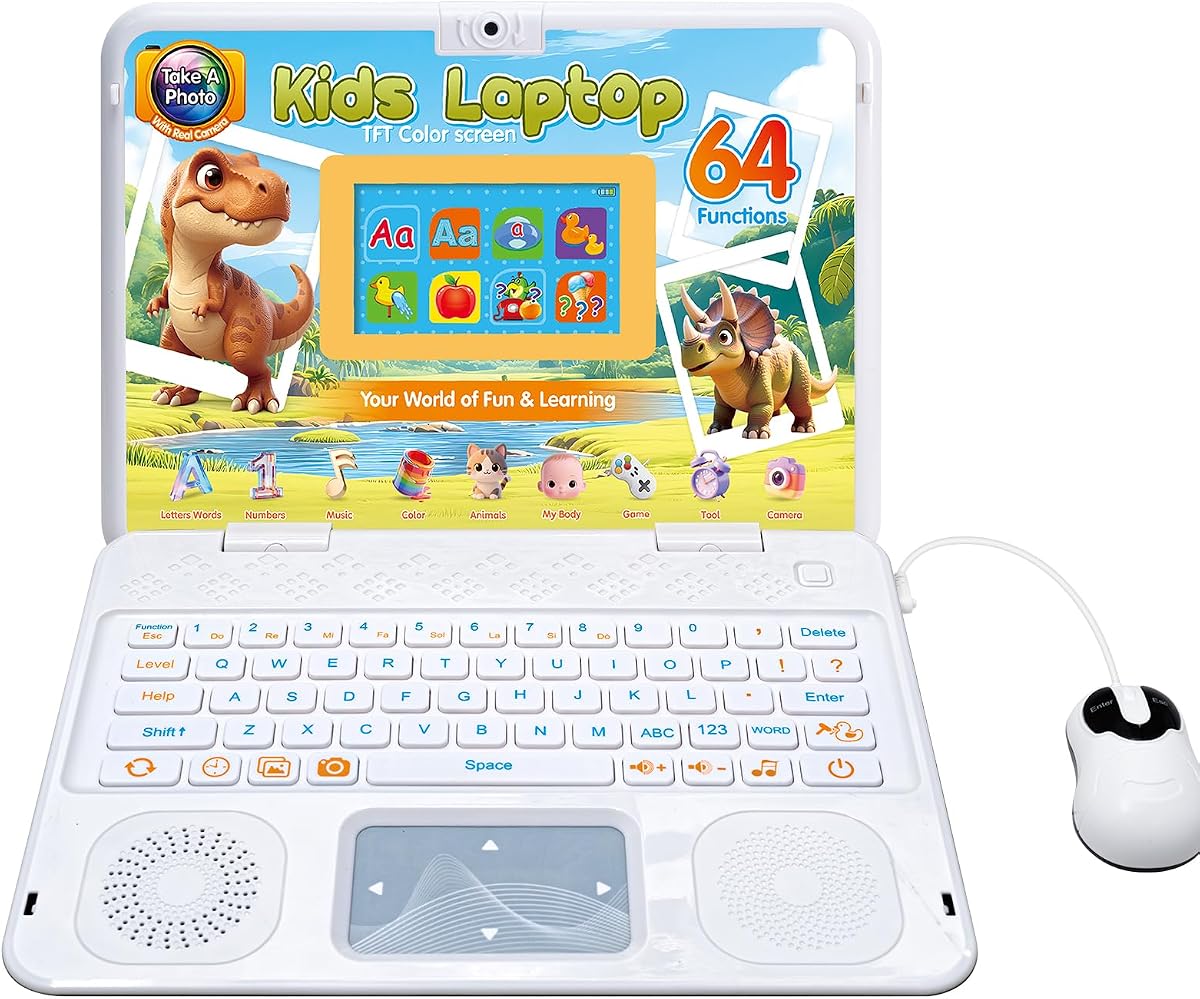
The Kids Laptop with Camera is designed to spark creativity and logic in young children through play-based learning. With a 4.6 rating it offers a safe environment for early cognitive development and basic computer familiarity.
We may earn a commission when you buy through this link, at no additional cost to you.
Its 64 learning modes include math and logic games that mimic coding structures without requiring technical knowledge. The built-in camera encourages creativity allowing kids to capture photos while learning digital tool usage.
The 4.3-inch TFT screen is colorful and easy to read for young eyes. While it does not run actual code it introduces the concept of input and output through interactive buttons and visual feedback.
This device is ideal for children under six who need a safe toy to explore technology. It lays the groundwork for later coding education by building comfort with interfaces and logic.
The camera feature encourages children to document their learning environment fostering early digital literacy and creativity.
Ergonomic design ensures the laptop is comfortable for small hands reducing fatigue during extended play sessions.
We may earn a commission when you buy through this link, at no additional cost to you.
The LeapFrog ABC and 123 Laptop introduces basic programming concepts through an interactive character named Pixel. With a 4.7 rating it excels at teaching young children sequences and logic through play.
We may earn a commission when you buy through this link, at no additional cost to you.
Children create simple code programs to guide Pixel through tasks helping them understand cause and effect relationships. This early exposure to coding logic prepares them for more complex programming later in life.
The device is battery operated and portable allowing for flexible learning anywhere in the house. While limited to pre-loaded activities it provides a safe screen time alternative to real computers.
This laptop is perfect for preschoolers transitioning from toys to learning devices. It offers a fun introduction to the concept of giving instructions to a machine without technical complexity.
Creating programs for Pixel teaches children the importance of step-by-step instructions which is a core coding concept.
Pixel responds to commands with animations and sounds reinforcing learning through immediate visual and audio feedback.
We may earn a commission when you buy through this link, at no additional cost to you.
The Kids Laptop Color Screen Educational offers a broad range of learning activities for early school age children. With a 4.0 rating it provides a fun introduction to logic and math skills through interactive games.
We may earn a commission when you buy through this link, at no additional cost to you.
Its 48 modes include calendar and clock reading which help develop time management skills alongside basic coding logic. The color screen makes learning visually appealing and keeps children engaged for longer periods.
The slim ergonomic design fits well in small hands allowing for comfortable typing practice. However as a toy device it does not support external software or internet connectivity which limits educational scope.
Ideal for children five and up this device serves as a gentle entry point to computing. It focuses on building confidence and basic skills before transitioning to real laptops for actual programming.
Activities like clock reading and logic games build foundational skills necessary for understanding algorithmic thinking.
The color screen and graphics keep children interested in learning tasks reducing the friction of educational software.
We may earn a commission when you buy through this link, at no additional cost to you.
The LEXiBOOK LAPTAB 10 inch offers an affordable entry point into touch-based laptops for kids. With a 4.2 rating it provides access to educational apps via Google Play without needing complex operating systems.
We may earn a commission when you buy through this link, at no additional cost to you.
Its 10.1-inch touchscreen allows for intuitive navigation and interaction with educational tools. The 128GB storage ensures plenty of space for downloading learning apps and saving creative projects locally.
Parental controls allow parents to manage app access and screen time effectively ensuring a safe learning environment. While processing power is modest it supports basic web browsing and video tutorials smoothly.
This device is best for families needing a simple touch laptop for learning on a budget. It balances functionality and safety well for introductory coding and educational app usage.
The touchscreen interface helps children learn intuitive gesture navigation which prepares them for modern device interfaces.
Robust controls let parents set limits on usage ensuring devices support learning goals without excessive entertainment distraction.
We may earn a commission when you buy through this link, at no additional cost to you.
Selecting the right laptop for coding education depends on matching hardware capabilities with software needs while ensuring durability for daily student use.
Coding platforms vary from lightweight block editors to full development environments requiring more power. For basic coding tools like Scratch an entry-level processor like Intel N100 or MediaTek Kompanio suffices. However text-based programming like Python may benefit from at least 8GB RAM and a mid-range CPU.
Prioritize processors that balance speed and battery life to ensure uninterrupted learning sessions.
A clear screen reduces eye strain during long coding hours. Full HD resolution (1920×1080) ensures text remains sharp while touchscreens help kids navigate interfaces easily. Look for matte finishes to reduce glare in bright rooms.
Choose at least 14 inches for comfortable code reading and reference splitting.
Local storage matters if saving large files or offline IDEs. SSDs are faster than eMMC but 64GB is often enough for school projects using cloud tools. Consider external card slots for expansion.
Prioritize devices with SSDs or external slots for better data management.
Long battery life supports remote learning or travel without frequent charging. Look for devices offering at least 8 hours of continuous use. Power-efficient processors help extend runtime significantly.
Select laptops with 8+ hour battery life for consistent daily use.
Chrome OS is secure and simple but limits advanced software. Windows allows full IDEs but needs careful parental control. Linux is powerful for older students but requires technical setup.
Choose Chrome OS for beginners and Windows for advanced development needs.
Kids' devices face drops and spills so military-grade tested chassis is ideal. Reinforced hinges and spill-resistant keyboards add significant protection. Consider rugged models for younger students.
Invest in durable builds with spill protection to extend device lifespan.
Lightweight devices under 3 lbs are easier for kids to carry to school. Size impacts usability since larger screens aid coding but add weight. Balance weight with screen real estate.
Choose devices under 3 lbs for daily student transport.
Safety features allow monitoring usage and blocking distractions. Built-in tools or family apps help manage screen time and content access. Look for robust settings for safe learning.
Prioritize laptops with parental controls for safe digital environments.
Start by setting up a secure user account with simple passwords or biometrics if supported. Install educational apps like Scratch or VS Code before first use to ensure a smooth learning environment.
Teach proper handling habits like carrying with two hands and placing on flat surfaces. Avoid eating or drinking near the device to prevent spills that could damage internal components.
Keep software updated regularly to maintain security and performance. Use a soft cloth to clean the screen and keyboard while avoiding harsh chemicals that might damage protective coatings.
Children as young as five can start with visual tools using tablets or simple laptops. By age eight to ten real laptops become viable for text-based languages. Match the device capability to their cognitive development stage.
Basic coding like Scratch or web development works well on entry-level laptops. Advanced tasks like game development or machine learning require more powerful machines. Most kids start with lightweight tools that run smoothly on budget devices.
Chrome OS is excellent for beginners due to its simplicity and security. Windows supports more advanced software but needs supervision. Linux is great for older students willing to learn technical setup.
Touchscreens help younger kids interact naturally with apps but are not essential for coding. Physical keyboards are more important for typing skills and coding efficiency. Consider touch if the device also serves as a tablet.
4GB RAM is sufficient for basic web-based coding and educational apps. For multitasking or heavier IDEs aim for 8GB minimum. More RAM ensures smoother performance during longer sessions.
Refurbished laptops can be cost-effective if they meet minimum specs like 8GB RAM. Ensure they come with warranties to protect against defects. Inspect battery health before purchase to guarantee performance longevity.
The HP Chromebook 14 x360 Plus leads our list for its balance of performance versatility and touchscreen ease for young coders. The Lenovo Chromebook 14 Touchscreen remains a top budget pick while the NIMO 15.6 FHD Student Laptop offers premium features for serious learners.
Focus on durability battery life and processor power when selecting a device. Ensure the operating system supports your child's coding goals and consider parental controls for safe usage.
Always verify current prices and availability before purchasing as offers change frequently. Investing in a reliable laptop sets a strong foundation for future coding skills and academic success.