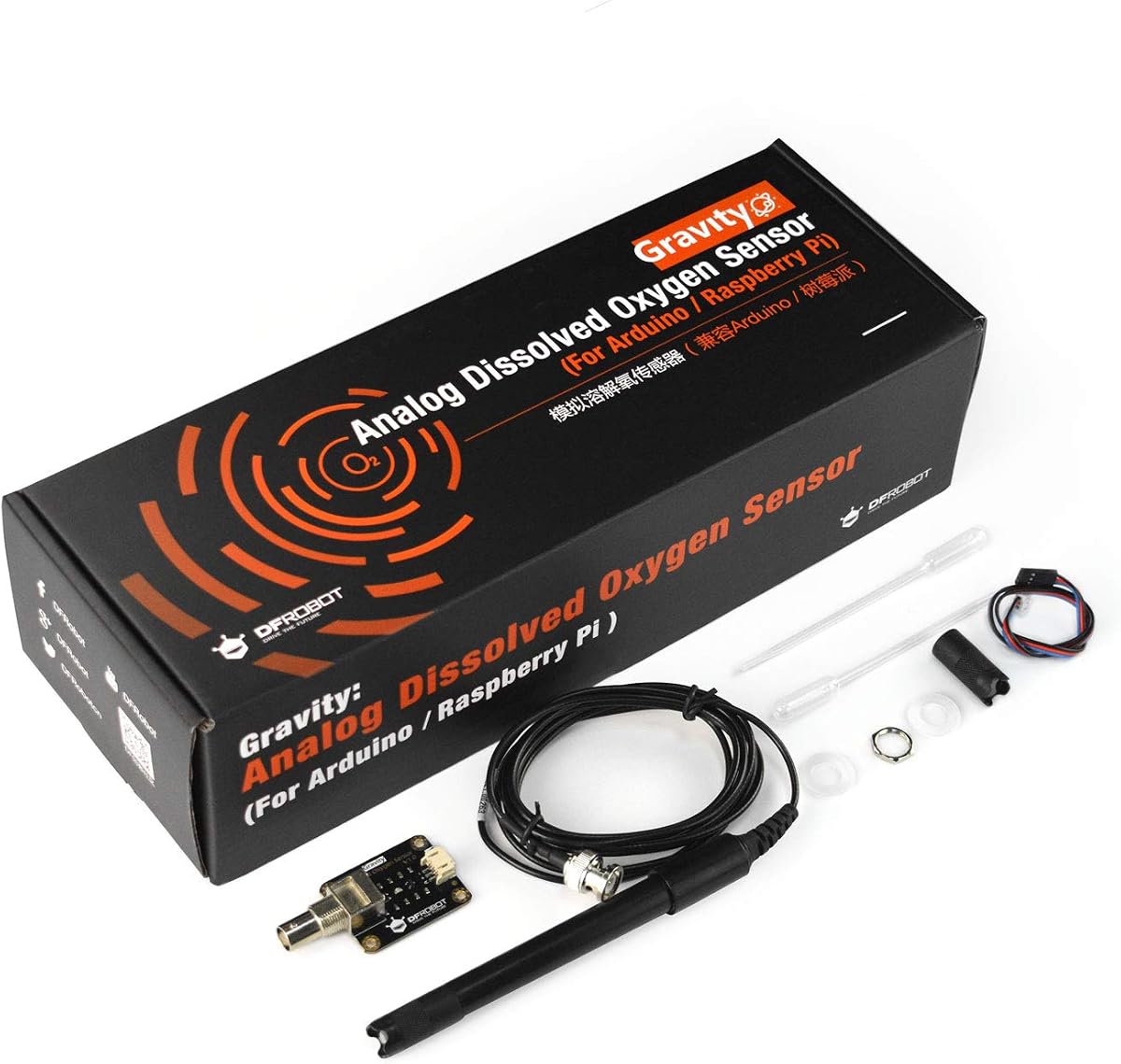
Gravity: Analog Dissolved Oxygen Sensor Kit
4.4Editor score
No polarization required
Hardware filtering included
Spare membrane cap
This guide compares the top ten dissolved oxygen sensors for water quality monitoring across aquaculture industrial lab and hobbyist applications to help you
Monitoring dissolved oxygen levels is critical for maintaining healthy water environments in aquaculture labs and industrial processes. Selecting the right sensor ensures accurate readings and reliable performance over time for your specific application needs.
We evaluated ten top-rated sensors based on accuracy durability calibration ease and connectivity features. Each product was assessed for its suitability in diverse settings ranging from hobbyist tanks to professional research facilities.
Each pick highlights key strengths and ideal use cases to guide your decision. Prices and availability may change frequently so verify current details before purchasing to ensure the best value for your project.
4.4Editor score

4.8Editor score

4.5Editor score
This table provides a side-by-side view of the ten featured sensors highlighting their core specifications and intended use cases to streamline your selection process.



This sensor kit offers an accessible entry point for monitoring water quality in aquaculture and IoT projects. With a rating of 4.4 it delivers reliable galvanic measurements without the complexity of polarization steps required by older models.
We may earn a commission when you buy through this link, at no additional cost to you.
Its standout feature is the ability to provide instant readings after power-on thanks to the galvanic probe design. The integrated hardware filtering ensures smooth analog outputs that simplify software integration on platforms like Arduino and Raspberry Pi.
While the package excludes the necessary NaOH filling solution due to shipping constraints preparing it is straightforward with local resources. Additionally users must supply their own ADC module to interface with microcontrollers adding slight complexity to the setup.
Ideal for hobbyists and engineers building custom water monitoring systems this kit balances performance and affordability. It remains a top choice for those needing low power operation and quick calibration capabilities in field or lab settings.
The galvanic probe eliminates waiting times for polarization allowing immediate data capture when power is applied.
Spare membranes and replaceable components ensure long-term usability without replacing the entire expensive sensor unit.
We may earn a commission when you buy through this link, at no additional cost to you.
This sensor is engineered for demanding environments where reliability is non-negotiable. While specific technical ratings are not listed the product emphasizes dependable water analysis and materials built for longevity in harsh conditions.
We may earn a commission when you buy through this link, at no additional cost to you.
Its design prioritizes user-friendliness to minimize setup hurdles and reduce ongoing maintenance expenses. The long cable allows flexible placement in tanks or industrial setups ensuring accurate sampling from difficult to reach locations.
The lack of detailed specifications in the listing may require direct contact with suppliers for precise integration details. Higher pricing reflects its industrial-grade construction intended for heavy use rather than casual or hobby applications.
Best suited for commercial aquaculture wastewater treatment or large-scale environmental monitoring this sensor delivers stability over time. It is an investment for facilities requiring consistent performance and reduced downtime for sensor maintenance or replacement.
Constructed from materials designed for long-term use ensuring resistance to corrosion and wear in tough environments.
The 10-meter cable enables remote installation points without needing to move the main monitoring station frequently.
We may earn a commission when you buy through this link, at no additional cost to you.
The YSI-605203 is a polarographic sensor designed for laboratory environments requiring precise oxygen measurement. With a strong 4.6 rating it reflects user confidence in its accuracy and build quality for scientific applications.
We may earn a commission when you buy through this link, at no additional cost to you.
Its compact and lightweight packaging suggests ease of handling during transport to field sites or between lab stations. The polarographic method is known for stability making it ideal for controlled testing scenarios where consistency matters most.
While the listing provides basic package dimensions it lacks extensive functional details like calibration protocols or compatibility specifics. Users should verify if a separate meter unit is required as this item appears to be a sensor-only component.
This sensor fits well within professional lab setups or educational institutions needing dependable tools for water quality analysis. It is a solid choice for those already invested in YSI systems seeking a replacement or upgrade for their existing equipment.
Polarographic technology ensures stable measurements suitable for rigorous scientific testing and research protocols.
Compact dimensions allow easy storage and transport without compromising measurement accuracy or sensor integrity.
We may earn a commission when you buy through this link, at no additional cost to you.
This meter stands out for its extensive feature set including temperature barometric pressure and salinity compensation. Rated at 4.0 it offers a robust solution for users needing detailed water quality data beyond just dissolved oxygen levels.
We may earn a commission when you buy through this link, at no additional cost to you.
The inclusion of a long 11.48-foot cable allows testing in deeper aquaculture tanks or ponds without risking the main unit. Additional features like 99-memory storage and IRDA port facilitate data tracking and transfer for compliance or research.
Manual salt input and multiple compensation modes add flexibility but may increase setup time for novice users. The unit is heavier than compact testers which could affect portability during frequent field sampling trips.
Best for serious aquaculture operators or educators needing thorough environmental logging this kit provides essential tools out of the box. It ensures accuracy through comprehensive compensation options and offers convenient data management for ongoing water health monitoring.
Memory storage and IRDA connectivity enable systematic recording of water trends for detailed analysis and reporting.
The extended cable length ensures the probe reaches deep water zones while keeping the meter safe and dry.
We may earn a commission when you buy through this link, at no additional cost to you.
With an outstanding 4.8 rating this galvanic sensor is praised for its user-friendly design and maintenance simplicity. It serves as a reliable replacement or upgrade for existing YSI Pro Series meter systems ensuring consistent oxygen readings.
We may earn a commission when you buy through this link, at no additional cost to you.
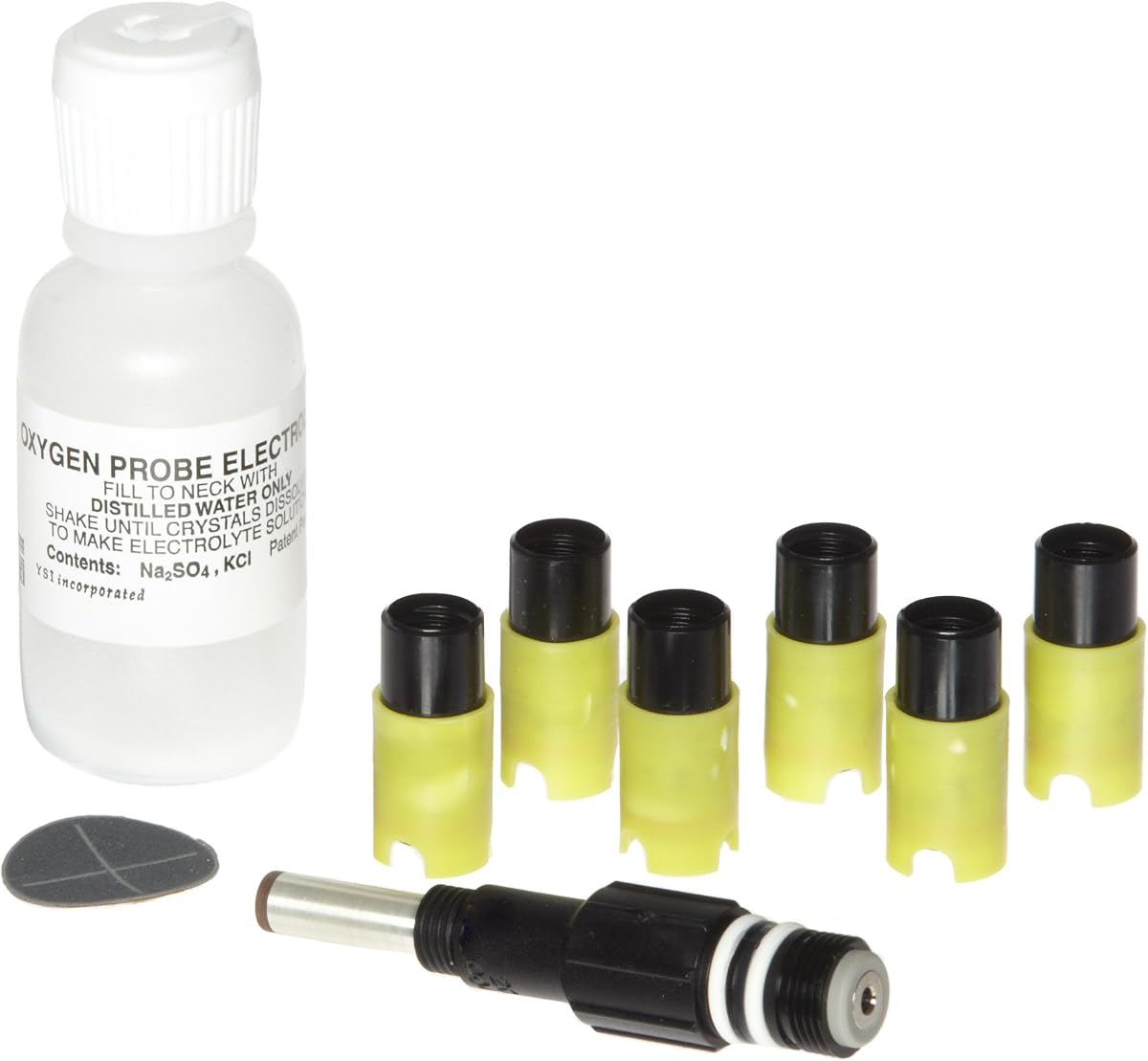
The standout advantage is the tool-free replacement process allowing operators to swap sensors quickly without specialized training or equipment. Pre-included membrane caps and solution reduce immediate setup time and ensure the sensor is ready for use upon arrival.
It is important to note this is a sensor-only unit requiring a compatible YSI meter for operation. While this limits standalone usage it enhances the value for existing YSI customers seeking a durable and easy-to-maintain component.
Ideal for facilities prioritizing minimal downtime and operational efficiency this sensor delivers on performance and convenience. It earns the Editor's Choice badge for balancing high user satisfaction with practical design features that simplify routine maintenance tasks.
Screw-on cap membranes allow rapid changes without tools keeping systems operational with minimal interruption.
Included solution and caps ensure the sensor is fully functional right out of the box for quick deployment.
We may earn a commission when you buy through this link, at no additional cost to you.
This tester brings modern connectivity to water quality monitoring with wireless pairing to smartphones or tablets. While no user rating is listed the design emphasizes convenience for field researchers needing real-time data analysis without bulky hardware.
We may earn a commission when you buy through this link, at no additional cost to you.
The fully sealed ABS housing ensures water resistance and allows the device to float if dropped a valuable safety feature in shallow environments. Multilingual app support broadens its usability for international projects and diverse research teams.
Reliance on a mobile device means performance depends on app stability and phone compatibility which can vary over time. Data export features simplify reporting but require consistent internet or email access for sharing logs remotely.
Best for field research and portable monitoring this tester combines durability with smart connectivity features. Its extended battery life and floating design make it a practical choice for outdoor aquaculture inspections or environmental surveys.
Wireless transmission enables immediate viewing and interpretation of water metrics on familiar mobile interfaces.
Weather shielded and floating capabilities protect the device during rough handling or accidental drops in water.
We may earn a commission when you buy through this link, at no additional cost to you.
This kit offers a complete solution for professional water quality monitoring with accuracy within two percent of full scale. Rated 4.5 it reflects satisfaction among users who need reliable field measurements without sacrificing portability.
We may earn a commission when you buy through this link, at no additional cost to you.
Features like automatic temperature compensation and manual salinity adjustment ensure readings remain accurate across varying environmental conditions. The package includes batteries and membranes so users can begin testing immediately without additional purchases.
The premium price point positions it for professional use where cost is secondary to precision and brand reliability. Battery life depends on standard 9V cells which are easy to replace but may require frequent swaps during extended fieldwork.
Best for field technicians and lab professionals this kit balances performance with practical features for everyday use. It remains a strong investment for those needing a proven system that delivers consistent results over time with minimal troubleshooting.
Two percent full scale accuracy ensures data integrity required for regulatory compliance and scientific reporting.
Inclusion of batteries and membranes provides immediate deployment for field testing without extra procurement steps.
We may earn a commission when you buy through this link, at no additional cost to you.
This sensor utilizes optical technology to measure dissolved oxygen offering advantages over traditional electrochemical methods. While no specific rating is available it is part of YSI's professional ProDSS line known for high performance in monitoring systems.
We may earn a commission when you buy through this link, at no additional cost to you.
Optical sensors typically require less maintenance and avoid electrolyte fill issues common with polarographic or galvanic probes. Compatibility with ProDSS meters allows integration into larger multi-parameter stations for comprehensive water quality analysis.
The unit is sold individually meaning users must already own a compatible ProDSS handheld or sonde to utilize it. High pricing reflects advanced optics and industrial durability intended for critical applications where data reliability is paramount.
Ideal for research institutions and environmental agencies needing long-term monitoring accuracy this sensor excels in demanding settings. It serves as a robust upgrade for professionals seeking to minimize maintenance overhead while maximizing measurement precision.
Luminescent optical sensing reduces maintenance needs by eliminating electrolyte replacement and membrane changes.
Designed to work seamlessly with ProDSS platforms for scalable and unified water quality monitoring.
We may earn a commission when you buy through this link, at no additional cost to you.
This portable meter streamlines setup with automatic two-point calibration buttons simplifying the process for daily testing. While no rating is listed the feature set targets users wanting accuracy without manual calibration complexity in aquaculture or pet care.
We may earn a commission when you buy through this link, at no additional cost to you.
Modular design allows replacing just the electrode rather than the whole device extending lifespan and reducing costs. Fast response times ensure real-time monitoring which is crucial for managing sensitive water conditions in tanks or small ponds.
Lack of extensive user reviews may leave some questions about long-term durability or app integration stability unanswered. Modular parts should be handled with care to maintain seal integrity and measurement consistency over time.
Best for home aquarists and small-scale growers this meter combines smart tech with practical usability. Its calibration ease and quick response make it a reliable helper for maintaining healthy water conditions without requiring lab expertise.
One-touch 0% and 100% buttons automate setup reducing human error and saving time during routine checks.
Replaceable electrodes allow targeted maintenance instead of full unit replacement saving costs over extended use.
We may earn a commission when you buy through this link, at no additional cost to you.
This meter provides a ready-to-go solution by including filling fluid calibration powder and spare membranes in the package. It targets users needing a high measurement range up to 40 mg/L for industrial or wastewater applications.
We may earn a commission when you buy through this link, at no additional cost to you.
Automatic temperature compensation and latest chip algorithms ensure stable and fast readings across different water temperatures. The large LCD screen improves readability in low light conditions while auto shutdown preserves battery life during idle periods.
The included accessories save time and cost but require proper handling to maintain effectiveness. The high measurement range may exceed needs for simple aquarium use meaning standard models might suffice for less demanding users.
Best for wastewater plants or brewing operations this meter delivers robust features and comprehensive support items. It ensures users can maintain measurement accuracy with minimal procurement delays thanks to its well-stocked accessory bundle.
Inclusion of calibration powder and membranes eliminates immediate purchase steps and supports accurate initial testing.
0 to 40 mg/L range supports industrial needs where higher oxygen levels must be tracked accurately.
We may earn a commission when you buy through this link, at no additional cost to you.
Selecting the right sensor requires understanding your specific water quality needs and environment.
Sensors generally fall into galvanic polarographic or optical categories. Galvanic types need no polarization and are great for IoT. Polarographic offers high accuracy but needs calibration. Optical sensors are durable and need less maintenance.
Choose based on whether you prioritize ease of use or maximum accuracy for your specific setting.
Most aquarium and aquaculture applications need 0 to 20 mg/L range. Industrial uses might need higher ranges like 40 mg/L. Accuracy within 2 percent is standard for professional models.
Ensure the range matches your water type and verify accuracy ratings before purchase.
Automatic calibration buttons save time and reduce user error. Manual calibration allows finer control but requires more effort. Two-point calibration ensures higher precision across different oxygen levels.
Look for auto calibration if you need quick setup for frequent measurements.
Some models offer wireless connectivity to smartphones or meters with data storage. This helps track trends over time without manual logging. Others provide analog outputs for custom integration.
Decide if you need digital logging or simple handheld display features.
Industrial sensors need rugged housing and waterproofing to withstand harsh conditions. Lab sensors might prioritize precision over toughness. Check IP ratings for water resistance.
Select build quality that matches your operational environment to ensure longevity.
Membranes and filling solutions need replacement periodically. Some kits include spare parts which reduces costs. Modular designs allow electrode swaps instead of full unit replacements.
Calculate long-term costs based on replacement frequency included with the product.
Battery life varies widely from hours to days. Rechargeable options reduce waste but add weight. Standard battery types like 9V or AA are easier to replace in field.
Match power needs to your usage frequency and remote operation requirements.
Established brands like YSI often offer better documentation and support. Check availability of manuals and firmware updates for smart devices.
Prioritize brands with reliable customer service to resolve issues quickly.
Before first use always follow calibration instructions using the provided powder or solution. This ensures the sensor reads accurately under current environmental conditions.
After each use rinse the probe gently with distilled water and store it in a humid cap to prevent membrane drying. Do not touch the sensing surface with bare hands.
Schedule regular maintenance such as membrane changes based on usage hours. Replace electrolyte or filling fluid when readings become unstable or drift over time.
Calibration frequency depends on usage but monthly is standard for most applications. High precision needs may require weekly calibration. Always calibrate after changing membranes or exposing the sensor to extreme temperatures.
Yes but you must adjust for salinity using manual input or auto compensation features. Some sensors have specific saltwater membranes. Check the model specs for salinity compensation range before purchasing.
Galvanic sensors work without external polarization power making them simpler for IoT. Polarographic sensors use external voltage for higher stability and accuracy but need periodic calibration. Both measure DO but suit different use cases.
Fluctuations often stem from temperature changes air bubbles on the membrane or lack of calibration. Ensure the probe is fully submerged and allow time for readings to stabilize before recording values.
Typical lifespan is 3 to 6 months depending on usage and water conditions. Heavy industrial use may require more frequent changes. Replace immediately if the membrane tears or becomes cloudy.
Most wireless sensors come with a companion app for data viewing. Some require account setup or firmware updates. Check compatibility with your phone OS before buying to ensure full functionality.
The reviewed sensors offer solutions for everyone from hobbyists to industrial professionals. Top picks highlight ease of use reliability and advanced tech depending on your needs.
Prioritize accuracy durability and maintenance costs when making your final decision. The right choice ensures consistent water quality and protects your aquatic investments effectively.
Always check current pricing and availability before purchasing. Prices change frequently and deals may vary so verify the latest details to secure the best value for your project.