
Newentor Weather Station
4.3Editor score
Color LCD screen
Wireless remote sensors
Atomic time and date
This guide compares the top large screen weather stations for home use, evaluating display size, accuracy, wireless range, and smart features to help you
Finding a reliable large screen weather station helps you monitor local conditions easily. These devices combine indoor and outdoor sensors with clear displays to show temperature, humidity, and forecasts at a glance.
We compared ten top models based on display quality, sensor accuracy, wireless range, and extra features like atomic time and smart home integration. Each product offers unique strengths for different user needs.
Every pick highlights key specs, pros, and cons to guide your decision. Prices and availability change often, so check current listings before buying to ensure you get the best deal available today.
4.3Editor score

4.2Editor score

4.1Editor score
The following comparison table provides a side-by-side overview of all ten models featured in this guide. It highlights essential specifications to help you quickly identify which station fits your space and needs.


The La Crosse V42-PRO-INT stands out as a top choice for those wanting connectivity. It offers a clear color display and wireless sensors that cover a wide range for accurate local data.
We may earn a commission when you buy through this link, at no additional cost to you.
Its smart features allow you to check conditions on your phone. The console shows wind speed, rainfall, and temperature with customizable alerts. You can also view extended forecasts when connected to the internet.
Some users find the setup slightly complex due to Wi-Fi requirements. Battery life for sensors depends on usage and conditions. These trade-offs are acceptable for the detailed data and remote access provided.
This model is ideal for tech-savvy homeowners or gardeners. It balances display quality with advanced monitoring tools. Consider this if you need both local readings and online weather insights.
Connect to Wi-Fi to view data on the free mobile app. This lets you check weather from anywhere and set custom notifications for alerts.
Includes dedicated sensors for wind direction and rainfall accumulation. Track storm intensity or garden needs with precise measurements displayed on the console.
We may earn a commission when you buy through this link, at no additional cost to you.
The Newentor Weather Station offers essential features at a budget-friendly cost. Its color screen makes it easy to read indoor and outdoor conditions without straining your eyes in low light.
We may earn a commission when you buy through this link, at no additional cost to you.
It includes an atomic clock for precise timekeeping and shows weather forecasts for the next day. You can connect up to three sensors for multi-location monitoring though only one comes in the box.
Battery power saves energy by dimming the screen when not viewed constantly. However the forecast is based on barometric trends and may not be perfect for severe weather events locally.
Choose this if you want a simple and inexpensive home weather clock. It provides good basic data for daily planning without requiring complex setup or expensive hardware.
The large color LCD shows temp humidity and time clearly. Adjustable backlight helps visibility in dark rooms or bright sunlight during daytime use.
Run on a DC adapter for constant display or use batteries for energy saving mode. This flexibility lets you adapt the station to your power preferences.
We may earn a commission when you buy through this link, at no additional cost to you.
The Ambient Weather WS-5000 is a premium option designed for durability and speed. Its ultrasonic sensors measure wind without moving parts reducing wear and maintenance over time.
We may earn a commission when you buy through this link, at no additional cost to you.
Data updates every five seconds giving you near real-time condition tracking. You can link it to Alexa or Google Home to automate tasks based on weather changes in your yard.
The price reflects its advanced tech and robust build quality. Setup requires Wi-Fi configuration which might be tricky for some users. Still the reliability and smart features justify the cost for enthusiasts.
Invest in this if you need serious monitoring for events or agriculture. It combines a color console with cloud capabilities for both local and remote weather insights.
Ultrasonic technology eliminates mechanical wind vanes that can break. This ensures long-term accuracy and less maintenance in harsh outdoor conditions.
Use IFTTT or Alexa to trigger devices based on weather. Automate sprinklers or lights using live data from your backyard station.
We may earn a commission when you buy through this link, at no additional cost to you.
The AcuRite Iris delivers comprehensive data on a large color screen. It displays more than fifty data points including heat index and dew point for complete environmental awareness.
We may earn a commission when you buy through this link, at no additional cost to you.
You get real-time readings for wind and rain along with pressure trends. The display is bright and easy to adjust for visibility throughout the day and night.
Setup involves mounting the outdoor sensor securely which takes some effort. The cost is higher than entry models but the data depth justifies the investment for detail-oriented users.
Select this if you want detailed local weather without a smart connection. It balances visual appeal with functional accuracy for daily household planning.
Access historical data heat index and dew point all in one place. This helps track comfort levels and trends beyond simple temperature readings.
Receive instant updates for wind speed and rainfall. The console keeps you informed of changing conditions without needing a phone.
We may earn a commission when you buy through this link, at no additional cost to you.
The La Crosse C85845 focuses on home comfort with colorful indicators. It shows humidity levels and heat index clearly to help you manage indoor air quality effectively.
We may earn a commission when you buy through this link, at no additional cost to you.
You can set alerts for high or low temperatures and humidity. The atomic clock ensures accurate time and date display which is useful for scheduling and alarms.
Battery operation dims the backlight to save power but requires setup. The forecast improves after several days of calibration for better local accuracy over time.
This unit suits families focused on health and comfort. It provides straightforward data with visual cues to keep your environment pleasant.
Colorful bars display humidity levels at a glance. This makes it easy to see if conditions feel too dry or humid inside.
Set your own thresholds for temperature or humidity changes. Get notified when conditions exceed safe or comfortable limits.
We may earn a commission when you buy through this link, at no additional cost to you.
The Ambient Weather WS-2000 offers smart features at a mid-range price. Its all-in-one sensor array measures wind and rain with minimal setup compared to multi-sensor kits.
We may earn a commission when you buy through this link, at no additional cost to you.
Connect to Wi-Fi to access data remotely and share local conditions with the community. The TFT display provides a clear view of current readings and forecasts.
Sensor batteries need periodic replacement which adds minor upkeep. The station is compact but might not fit large outdoor mounts easily. Still it offers good value for connected monitoring.
Pick this if you want internet access without spending premium prices. It balances modern connectivity with essential weather tracking for the home.
Use the enhanced Wi-Fi to view readings online. Share your data or check it from a phone when away from home.
Wind speed direction and rainfall are measured by one unit. This simplifies installation and ensures consistent readings from a single point.
We may earn a commission when you buy through this link, at no additional cost to you.
The La Crosse Advanced model delivers reliable data with a full color LCD. It covers a three hundred foot range for flexible sensor placement around your yard.
We may earn a commission when you buy through this link, at no additional cost to you.
Atomic time ensures your clock never loses sync. The display shows humidity and temperature with alerts to keep you informed about extreme conditions.
It lacks smart connectivity which keeps the price moderate and setup simple. Battery usage can be higher without power saving modes but performance remains steady.
Choose this for a traditional station without internet needs. It offers clarity and range for households that prefer local-only monitoring.
Receive signals up to three hundred feet without obstructions. This allows sensor placement in various spots around the property easily.
Self-set clock keeps time accurate year round. Supports daylight saving changes automatically for hassle free scheduling.
We may earn a commission when you buy through this link, at no additional cost to you.
The Tempest Weather Station uses solar power to run without batteries. Its solid state design means no moving parts to wear out or break in storms.
We may earn a commission when you buy through this link, at no additional cost to you.
It tracks lightning strikes and solar radiation along with wind and rain. Updates occur every three seconds providing fast insights into sudden weather shifts.
This model relies on apps for viewing data which may not suit everyone. Performance depends on solar exposure so shaded spots reduce reliability over time.
Opt for this if you want eco-friendly and low maintenance monitoring. It fits well for modern homes using smart home automation.
Sensor runs entirely on solar energy for long operation. This reduces battery waste and maintenance effort for the owner.
Solid state sensors resist wind damage better than vanes. Enjoy reliable readings without mechanical failures or frequent replacements.
We may earn a commission when you buy through this link, at no additional cost to you.
The S84107 focuses on visual appeal with seasonal backgrounds. Its color forecast shows weather trends clearly for quick daily planning needs.
We may earn a commission when you buy through this link, at no additional cost to you.
Pressure history graphs help you see changes over twenty four hours. Atomic time keeps the schedule accurate and useful for alarms.
This station is mainly for indoor use with basic outdoor temp readings. It lacks advanced smart functions which keeps it simple and budget-friendly for basic users.
Select this if you want a nice looking weather clock. It provides essential data without complexity for casual home monitoring.
Display background changes every three months for variety. This adds a decorative touch to your weather console design.
View historical pressure trends to anticipate shifts. Helps you understand upcoming weather changes beyond simple icons.
We may earn a commission when you buy through this link, at no additional cost to you.
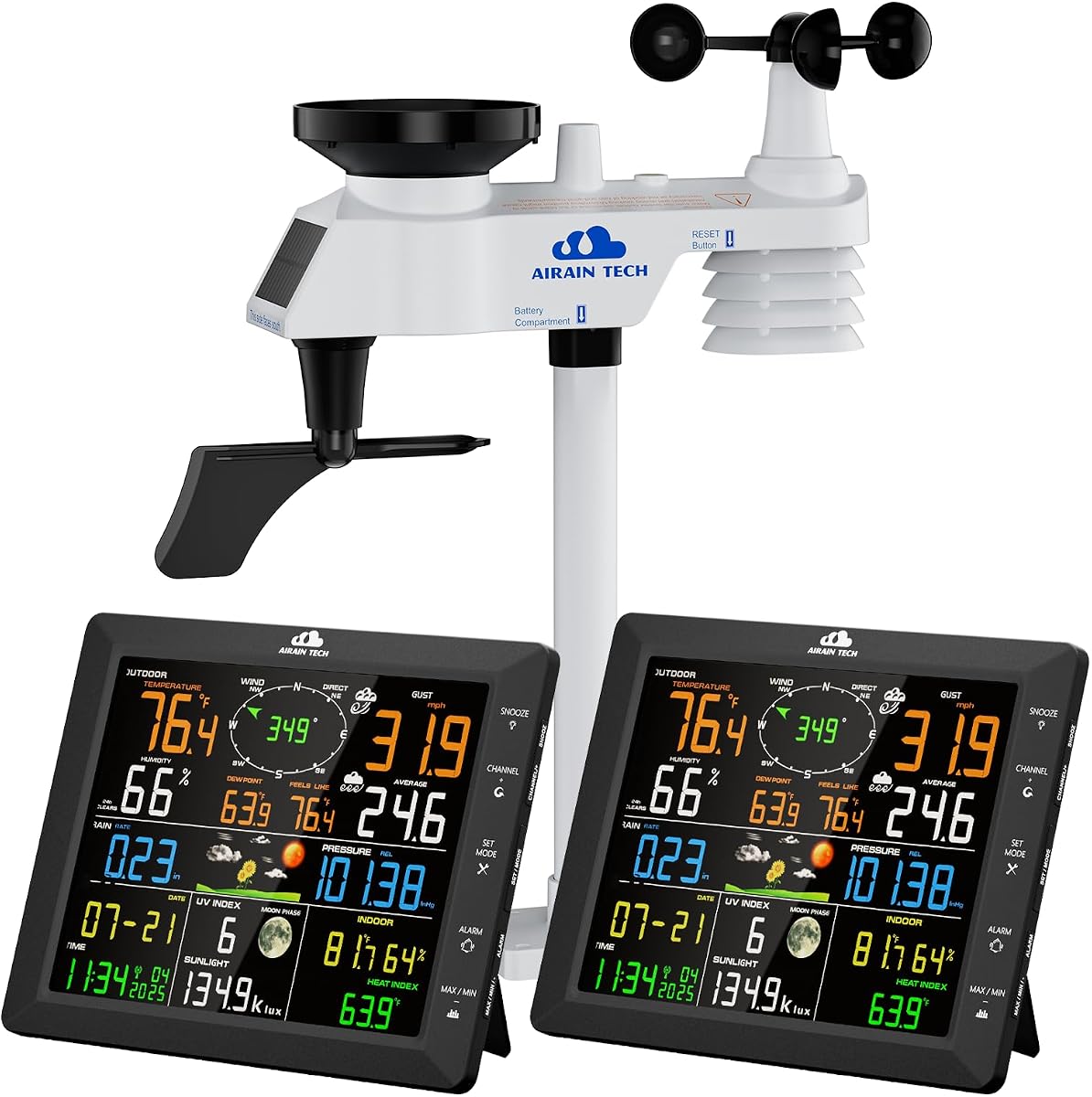
This station features two displays for viewing weather in different rooms. Its large 8.5 inch screen makes data visible from across the room.
We may earn a commission when you buy through this link, at no additional cost to you.
It tracks wind direction and rainfall with high precision. The system supports wind chill and dew point for accurate comfort assessment.
Two displays add bulk and require setup for each unit. Without Wi-Fi you cannot access data remotely but local monitoring is robust.
Ideal for large homes needing multiple views. It offers professional-grade data at a consumer-friendly price.
Get two main screens to place in different rooms. This ensures weather info is available wherever you spend time.
Sensors meet higher accuracy standards for detailed tracking. Great for hobbyists needing precise environmental data.
We may earn a commission when you buy through this link, at no additional cost to you.
Choosing the right station involves weighing display size, sensor accuracy, and connectivity needs against your budget and home layout.
A larger screen ensures you can read data easily from across a room. Look for color LCDs with adjustable brightness so the display remains clear in both dim and bright environments.
Prioritize a display size that fits your space and viewing distance.
Check the maximum transmission distance to ensure sensors can reach desired outdoor spots without obstructions. Models with extended range help place sensors where conditions are most representative.
Ensure the range covers your yard or property effectively.
Consider whether you need basic temperature and humidity or advanced metrics like wind speed and rainfall. Ultrasonic or professional-grade sensors offer better accuracy but often cost more.
Match sensor types to your specific monitoring needs and environment.
Smart stations connect to Wi-Fi for remote access and automation. If you want to check weather on your phone or use voice assistants, a connected model is essential.
Decide if online data access and home automation are worth the extra cost.
Some units run on batteries while others require adapters. Battery-saving modes can extend life but may dim the screen. Ensure you can maintain power for continuous operation.
Evaluate power needs based on whether the device stays in one spot.
Look for customizable alerts to notify you of extreme conditions. This is vital for safety or protecting outdoor equipment during storms or freezing temperatures.
Custom alerts enhance safety and help you prepare for bad weather.
Local forecasts often rely on barometric pressure trends. More days of calibration usually improve accuracy. Understand that these are guides not absolute guarantees.
Expect general trends rather than precise predictions for severe events.
Price varies widely from basic units to premium systems. Determine which features matter most to avoid overspending on tools you wont use regularly.
Focus on value by prioritizing the features you need most.
Begin by placing the main console in a central indoor location where it is protected from heat sources and direct sunlight. This ensures accurate readings and prevents display fading.
Install the outdoor sensor in an open area away from buildings or trees that could block signals or alter temperature readings. Secure it tightly to withstand wind and rain.
Calibrate the forecast by allowing several days for the barometer to adjust to your local environment. Check battery levels regularly and replace them to avoid data loss or display failures.
Forecasts are based on local pressure changes and trends so they give a general idea of upcoming weather rather than a precise prediction. They work best for short-term changes within twelve to twenty four hours.
Place sensors in open spots away from direct sunlight heat sources and obstructions. Mounting them on a pole away from structures helps capture true environmental conditions for accurate data.
Not all models require Wi-Fi but it enables remote viewing and smart home integration. Decide based on whether you want to check data from outside your home or automate devices.
Allow the station to run for several days without moving it so it can learn local pressure trends. Some models offer calibration options in settings to fine-tune readings to your area.
Many stations support multiple sensors to monitor different areas. Check the model's maximum capacity and range to ensure they work together without interference or connection issues.
Battery life depends on usage and sensor type. Models with solar options or power saving modes last longer. Check indicators regularly to avoid unexpected outages or data gaps.
Wind chill measures how cold the air feels due to wind speed. Stations that show this help you gauge real comfort levels and frostbite risks when it is windy.
Most are designed for simple plug and play setup with clear manuals. Smart models might need extra steps for Wi-Fi but generally they require minimal technical knowledge to begin.
The top picks cover a range of needs from basic home monitoring to advanced smart integration. The La Crosse V42-PRO leads with connectivity while the Newentor offers solid budget value.
Prioritize display size and sensor range based on where you plan to install the unit. Consider whether remote access matters to you before spending on premium smart models.
Prices and stock change often so review current listings before purchasing. Choosing a station that fits your space and budget ensures reliable weather insights for years.