
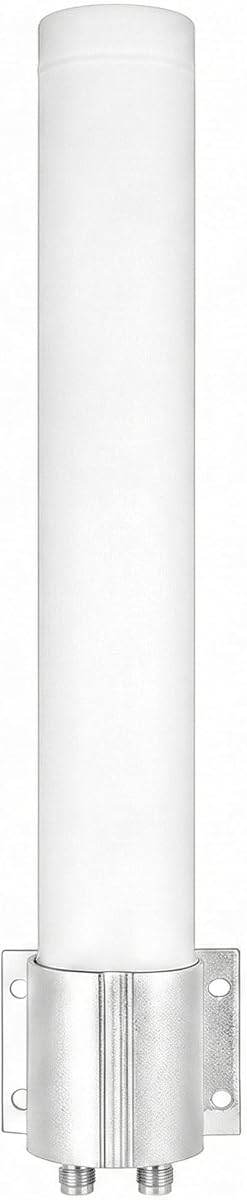
Eifagur 9dBi Long Range Dual Band Outdoor WiFi Antenna
4.7Editor score
9dBi high gain design
Supports 2.4GHz and 5GHz
Outdoor ready construction
This guide compares the top Marine WiFi Antenna options for boats and marine environments focusing on signal strength durability and connectivity reliability
Finding the right Marine WiFi Antenna is essential for staying connected while on the water. Whether you are cruising near the coast or traveling offshore, a reliable antenna ensures your devices maintain strong signals for navigation communication and entertainment.
We evaluated ten top-rated models based on their gain range weather resistance and compatibility with marine standards. Our comparison covers dual-band options omni-directional designs and rugged builds designed to withstand salt spray and harsh environmental conditions.
Each pick highlights key features pros and cons to help you choose the best fit for your vessel. Please note that availability and details may change over time so verify current specifications before making your final purchase decision.
4.7Editor score

5.0Editor score
4.0Editor score
This table provides a side-by-side overview of all ten models evaluated in this guide. Compare key specifications like frequency bands gain and connector types to find the antenna that matches your marine connectivity needs.


The Poynting Omni-496 stands out as the top choice for serious mariners needing robust connectivity. With a perfect 5.0 rating it delivers reliable performance across dual-band frequencies while resisting the harshest coastal elements.
We may earn a commission when you buy through this link, at no additional cost to you.
Its design supports IEEE 802.11 standards from a to Wi-Fi 7 ensuring future-proof connectivity. The IP68 water ingress protection and salt spray compliance mean it withstands continuous exposure to ocean spray and humidity without degradation.
While the cost is higher than basic models the investment pays off in longevity and signal consistency. The 8dBi gain ensures strong reception even when anchored far from shore or in areas with weak signal strength.
This antenna is ideal for yacht owners and coastal cruisers who prioritize uninterrupted internet access. Its rugged build and universal mounting options make it a smart upgrade for any marine communication setup.
Engineered with UV and saltwater protection it maintains structural integrity under intense sun and corrosive spray.
Compatible with 5G and Wi-Fi 7 standards it ensures your connection stays fast as networks evolve.
We may earn a commission when you buy through this link, at no additional cost to you.
The Pro-Gain antenna offers enterprise-level reliability for remote offices and marine operations. Its MIMO technology and high gain ensure stable video conferencing and data throughput even in signal-poor regions.
We may earn a commission when you buy through this link, at no additional cost to you.
Constructed from UV-resistant architectural fiberglass it avoids the degradation common in cheaper plastic panels. The VSWR of 1.8 means efficient power transfer reducing heat and maximizing range in challenging terrains.
Installation requires careful attention to cable quality and connection sealing for best results. Professional users may appreciate the dual connectors and polarization design that reduce multi-path interference in busy environments.
Ideal for industrial boats or offshore teams needing consistent telemetry. This antenna bridges the gap between consumer gear and industrial standards offering durability and performance where it counts.
Low VSWR ensures minimal signal reflection allowing more power to reach your remote devices.
Supports over ten devices simultaneously without lag ensuring smooth 4K streaming and calls.
We may earn a commission when you buy through this link, at no additional cost to you.
This version of the Poynting OMNI-496 offers a streamlined solution for coastal vessels. It covers essential frequencies for Wi-Fi and LTE while maintaining the robust build expected from marine-grade hardware.
We may earn a commission when you buy through this link, at no additional cost to you.
The antenna supports IEEE standards for reliable wireless connectivity across various routers. Its IP68 rating ensures it withstands heavy rain and salt spray without compromising internal components or performance.
Mounting is straightforward with the 1-inch marine standard thread though brackets are sold separately. The 7.5dBi gain provides ample range for typical recreational use without the complexity of enterprise setups.
Buyers seeking a balance between performance and cost will find this model appealing. It works well for boats needing consistent internet access near ports or along protected waterways.
Supports Wi-Fi LTE and WiMAX ensuring versatility across different network types and regions.
Feed-through design simplifies mounting on standard marine poles and mast brackets.
We may earn a commission when you buy through this link, at no additional cost to you.
This combination antenna consolidates GPS cellular and Wi-Fi into a single sleek unit. It is designed for vessels with limited mounting space needing essential navigation and data capabilities.
We may earn a commission when you buy through this link, at no additional cost to you.
The through hole design allows flush installation on decks or cabins reducing drag and visual clutter. Weatherproof construction ensures reliability in wet and humid conditions without extra protective housing.
While it lacks the high gain of dedicated omni-antennas it serves well for basic navigation and connectivity. The 24-inch leads simplify connections to routers and GPS devices within reach.
Ideal for smaller boats or where space is at a premium. It offers a practical entry point for upgrading multiple systems without extensive custom wiring.
Integrated puck shape minimizes deck clutter while providing critical navigation and data links.
Pre-terminated leads save time and reduce errors during installation.
We may earn a commission when you buy through this link, at no additional cost to you.
The ALFA antenna delivers impressive gain at a budget-friendly price point. Its fiberglass body resists corrosion making it a practical choice for marine environments where cost matters.
We may earn a commission when you buy through this link, at no additional cost to you.
With 9dBi gain it extends wireless range significantly compared to standard router antennas. This makes it suitable for larger boats or docks with weak Wi-Fi signals from shore.
Installation requires a coaxial cable with N-male connectors as the antenna itself lacks one. Weatherproofing should be added separately to ensure long-term durability against rain and spray.
Buyers on a tight budget but needing strong range will appreciate this model. It performs well for RVs and boats where high gain is more critical than specialized marine certification.
9dBi gain boosts signal strength allowing reliable connections over greater distances.
Fiberglass housing handles humidity and salt better than standard plastic alternatives.
We may earn a commission when you buy through this link, at no additional cost to you.
This antenna targets cellular connectivity with robust 4G and 5G support. It serves users needing reliable mobile data for marine operations where Wi-Fi coverage is sparse.
We may earn a commission when you buy through this link, at no additional cost to you.
Engineered for enterprise and public safety use it meets strict performance standards. The ABS housing ensures durability against vibration and impacts during high-speed transit.
Compliance with federal standards means it works across various carrier networks without interference. While it lacks Wi-Fi bands the cellular strength compensates for many communication needs.
Ideal for IoT systems or remote monitoring on vessels. Its rugged design ensures consistent service even in demanding industrial marine applications.
Covers CBRS and 5G ensuring connectivity even when traditional bands are congested.
Heavy-duty construction withstands vibration and impacts common in marine transit.
We may earn a commission when you buy through this link, at no additional cost to you.
The Bingfu pack offers a cost-effective upgrade for routers and devices needing dual-band support. It includes two antennas enabling MIMO connectivity for improved data rates and stability.
We may earn a commission when you buy through this link, at no additional cost to you.
With 3dBi gain it provides modest range improvements over stock antennas. The RP-SMA connector fits many routers but may require adapters for marine equipment with different ports.
These antennas work well for devices requiring backup or secondary connectivity. Their compact design makes them suitable for onboard routers or security cameras with space constraints.
Best for budget-conscious users needing basic dual-band enhancement. While not rugged for direct outdoor marine use they serve well in protected internal mounting locations.
Two units in one pack allow setup for MIMO systems and redundant connections.
Compatible with routers adapters and cameras providing flexible connectivity options.
We may earn a commission when you buy through this link, at no additional cost to you.
This antenna merges two cellular and one Wi-Fi channel into a single roof mount. It simplifies cabling for users needing both internet access and mobile data on vessels.
We may earn a commission when you buy through this link, at no additional cost to you.
IP67 waterproofing ensures protection against water jets and rain. The 4G LTE range covers most countries making it suitable for international cruising with cellular modems.
Cable length is limited requiring careful planning for installation on larger boats. It performs best with compatible routers having multiple antenna interfaces for MIMO setups.
Recommended for users with mixed cellular and Wi-Fi needs in compact spaces. It reduces clutter and provides decent performance for remote monitoring or internet tasks.
Integrates cellular and Wi-Fi reducing the need for separate antennas and cables.
Supports widespread 4G LTE frequencies ensuring connectivity across different regions.
We may earn a commission when you buy through this link, at no additional cost to you.
Eifagur offers a highly rated budget antenna with significant range capabilities. The 9dBi gain makes it an attractive choice for users needing extra reach without a premium price.
We may earn a commission when you buy through this link, at no additional cost to you.
Its outdoor construction resists environmental factors making it suitable for temporary or protected marine mounts. The simple design allows quick upgrades to existing routers or access points.
While it lacks marine certification its performance and durability satisfy many recreational users. It is ideal for boats near shore or docks where basic weather resistance suffices.
Buyers looking for affordability without sacrificing range will find this model effective. It provides reliable connectivity for standard devices in challenging signal environments.
9dBi gain boosts signal strength significantly beyond standard router antennas.
Direct replacement design makes upgrades easy without complex wiring.
We may earn a commission when you buy through this link, at no additional cost to you.
Safety is paramount on the water and the HYS VHF antenna delivers essential communication capabilities. It covers all distress channels and NOAA weather frequencies for critical alerts and navigation.
We may earn a commission when you buy through this link, at no additional cost to you.
The fiberglass radome resists UV and salt corrosion ensuring longevity. The ratchet mount allows quick folding for storage or low-clearance situations without tools.
Though not a Wi-Fi antenna it is vital for VHF radios that remain standard on vessels. Its 3dBi gain ensures clear transmission for ship-to-ship and ship-to-shore contact.
Essential for every boat owner needing reliable voice and weather communication. This antenna complements Wi-Fi setups by providing the safety link required for offshore travel.
Covers Channel 16 and NOAA weather for critical safety and distress communication.
Ratchet design allows folding the mast down when not in use.
We may earn a commission when you buy through this link, at no additional cost to you.
Selecting the right antenna requires balancing range durability and connectivity needs. This guide outlines key factors to consider for marine applications.
Gain measured in dBi indicates how well the antenna focuses signal power. Higher gain like 8dBi or 9dBi extends range but may narrow the beam width.
For marine use choose higher gain to overcome distance from shore or obstacles like hulls.
Dual-band antennas support 2.4GHz and 5GHz offering better performance and less interference. Some also cover 5G cellular frequencies for broader connectivity.
Ensure the antenna matches your router modem frequencies for optimal data transfer.
IP68 rating provides complete protection against water immersion and dust. IP67 offers protection against temporary immersion but IP68 is preferred for marine spray.
Look for IP68 to ensure long-term reliability in wet salty environments.
N-Type connectors are standard for marine adapters while SMA or RP-SMA suit consumer routers. Mismatched connectors require adapters that can add signal loss.
Check your device connector and ensure the antenna matches or supports easy adapters.
Mounts should fit 1-inch standard marine poles or include L-brackets for flat surfaces. Adjustable mounts help align the antenna for best reception.
Choose mounts that allow secure fastening and easy folding for clearance.
Fiberglass radomes resist UV degradation and salt corrosion better than plastic. Metal components should be stainless steel to prevent galvanic corrosion.
Prioritize UV-resistant materials to avoid yellowing or brittleness over time.
Voltage Standing Wave Ratio measures how much signal reflects back. Lower VSWR like 1.8 means efficient power transfer and less heat.
Select antennas with VSWR under 2.0 for better performance and longevity.
MIMO uses multiple antennas to increase data rates and reliability. Antennas with dual connectors support MIMO routers for faster internet.
Use MIMO antennas if your router supports it to maximize bandwidth.
Install the antenna high on the mast or rail to maximize line-of-sight. Secure all connections with waterproof sealant to prevent moisture ingress that can degrade performance.
Periodically inspect the radome and connectors for cracks or corrosion. Clean the surface with fresh water and mild soap to remove salt deposits after every trip.
Check cable routing to ensure no kinks or pinching that can signal signal loss. Store folded antennas safely during off-season to protect them from harsh elements.
Wi-Fi antennas handle data transmission for internet devices while VHF antennas manage voice and safety communications. Wi-Fi uses higher frequencies for short-range internet whereas VHF operates on 156-163MHz for ship-to-shore contact.
Higher gain increases range but may narrow the beam angle. For marine omni-directional use balance gain with wide coverage to ensure signals reach from all directions.
Standard outdoor antennas may work but lack saltwater and UV protection. Marine-specific models offer better durability against corrosion and humidity for long-term reliability.
N-Type connectors are standard for marine adapters. Most routers use SMA or RP-SMA so check your router and use adapters if the antenna has a different connector.
Wrap connections with self-fusing silicone tape or use waterproofing gel. This seals joints against moisture preventing signal loss and corrosion over time.
Yes IP68 offers complete protection against immersion and dust. It ensures the antenna withstands heavy rain and constant spray without internal damage.
Yes MIMO needs routers with multiple antenna inputs. Using MIMO antennas with compatible devices boosts data rates and connection stability significantly.
Loosen the ratchet mechanism to pivot the mast downward. Secure it in the folded position to prevent movement during transport or docking.
This guide reviewed ten antennas balancing range durability and connectivity. The Poynting Omni-496 leads for overall performance while Eifagur and Pro-Gain offer premium and budget options.
Prioritize waterproof ratings and corrosion resistance for long-lasting marine use. Ensure connector types match your router and use high-quality cables for best results.
Prices and availability change so verify current specs before purchasing. Choose the antenna that fits your specific marine environment and communication needs.