
4K AI-Powered Conference Webcam with Microphones Speakers, Zoom Certified
4.1Editor score
120° wide angle
AI auto framing
Privacy lens cover
This guide compares the best auto tracking conference camera systems for hybrid meetings, evaluating video quality, AI tracking precision, audio clarity, and
Modern hybrid work demands reliable video conferencing tools that capture every participant clearly. Auto tracking conference cameras use advanced AI to follow speakers automatically, ensuring no one is left out of the frame during dynamic discussions or presentations.
We evaluated ten top-rated systems based on resolution, zoom capabilities, audio performance, and ease of integration with platforms like Zoom and Teams. Our analysis focuses on real-world usability, tracking accuracy, and connection flexibility for various room sizes.
Each selection highlights unique strengths, from budget-friendly all-in-one kits to premium broadcast-ready units with NDI support. While specific pricing fluctuates daily, these models represent the current best value and performance for professional meeting environments.
4.1Editor score

4.8Editor score

4.6Editor score
This side-by-side comparison highlights key specifications across ten leading auto tracking conference camera systems to help you identify the right fit for your meeting space requirements and technical needs.




The TONGVEO 4K Conference Room Camera System earns our top spot due to its seamless blend of high-resolution video and intelligent tracking. With a 4.8 rating, users praise its ability to keep speakers centered without manual intervention.
We may earn a commission when you buy through this link, at no additional cost to you.
Its AI algorithms detect faces and humanoid shapes to maintain focus during presentations. The 3x optical zoom ensures clarity even when capturing details from a distance, while the 93-degree wide angle covers most standard meeting tables effectively.
Though the speakerphone battery adds flexibility for portable use, some might prefer wired audio for constant reliability. The requirement to use HDMI for true 4K resolution is a minor limitation compared to the overall value it offers.
Teams needing a complete audio-video solution for small to medium spaces should prioritize this kit. Its universal compatibility with major platforms and robust support make it a dependable choice for hybrid collaboration.
Advanced algorithms lock onto presenters and adjust framing automatically, reducing distractions during live sessions.
The included speakerphone delivers full-duplex audio with noise cancellation, simplifying setup by eliminating separate devices.
We may earn a commission when you buy through this link, at no additional cost to you.
For teams prioritizing cost without sacrificing essential features, this Zoom Certified Webcam offers solid value. Its AI auto framing ensures everyone stays visible, making it ideal for quick daily standups or casual check-ins.
We may earn a commission when you buy through this link, at no additional cost to you.
The 120-degree field of view is particularly useful for wider desks or small huddle spaces. Dual AI noise-canceling microphones help maintain audio clarity even in noisy office environments without needing extra hardware.
Users may find the tracking less dynamic than premium models, occasionally lagging during rapid movement. Additionally, the lack of optical zoom means digital cropping reduces clarity when focusing on distant details.
Startups or small offices seeking a plug-and-play solution will appreciate its simplicity. With a physical privacy cover and easy USB connection, it balances security and functionality at an entry-level price point.
Official Zoom certification ensures seamless integration with meeting software, minimizing setup hurdles for remote workers.
A physical lens cover adds a layer of security, allowing users to visually confirm when the camera is inactive.
We may earn a commission when you buy through this link, at no additional cost to you.
This All-in-One system shines in fluid motion capture thanks to its 60fps video output. While it caps at 1080P, the high frame rate reduces motion blur when speakers move around the room actively.
We may earn a commission when you buy through this link, at no additional cost to you.
The Bluetooth speakerphone pairs easily with the camera, creating a unified audio-video kit. Noise cancellation and a 5-meter pickup range ensure that voices are clear across the table without echo interference.
Limitations include the lack of 4K resolution and the requirement for a wired connection to the camera unit. These trade-offs are acceptable for users prioritizing smooth playback over static image sharpness.
Educators or trainers needing fluid visuals for demonstrations will find this model highly effective. Its straightforward setup and support for major conferencing apps make it accessible for non-technical staff.
At 60 frames per second, video transitions appear natural, reducing eye strain during long virtual meetings.
The speakerphone works wirelessly with the system, reducing cable clutter while maintaining consistent audio quality.
We may earn a commission when you buy through this link, at no additional cost to you.
Gesture control adds a unique layer of interaction to this 4K system. Simple hand signals like OK or V allow users to toggle tracking modes without touching a remote or computer interface directly.
We may earn a commission when you buy through this link, at no additional cost to you.
The 120-degree field of view accommodates larger groups, while the built-in speakerphone provides reliable audio for 8 to 12 participants. USB3.0 connectivity ensures high-speed data transfer for smooth video streams.
While digital zoom offers flexibility, it does not match the clarity of optical zoom for distant subjects. Additionally, mastering the specific gesture commands requires practice during initial setup and orientation.
Tech-forward teams or educators teaching virtual classes may enjoy the interactive capabilities. This model bridges the gap between standard conference tools and engaging presentation hardware effectively.
Gesture controls eliminate the need to reach for devices, keeping hands free for whiteboards or notes during talks.
Users can save and recall specific camera angles via remote, streamlining transitions between group and individual shots.
We may earn a commission when you buy through this link, at no additional cost to you.
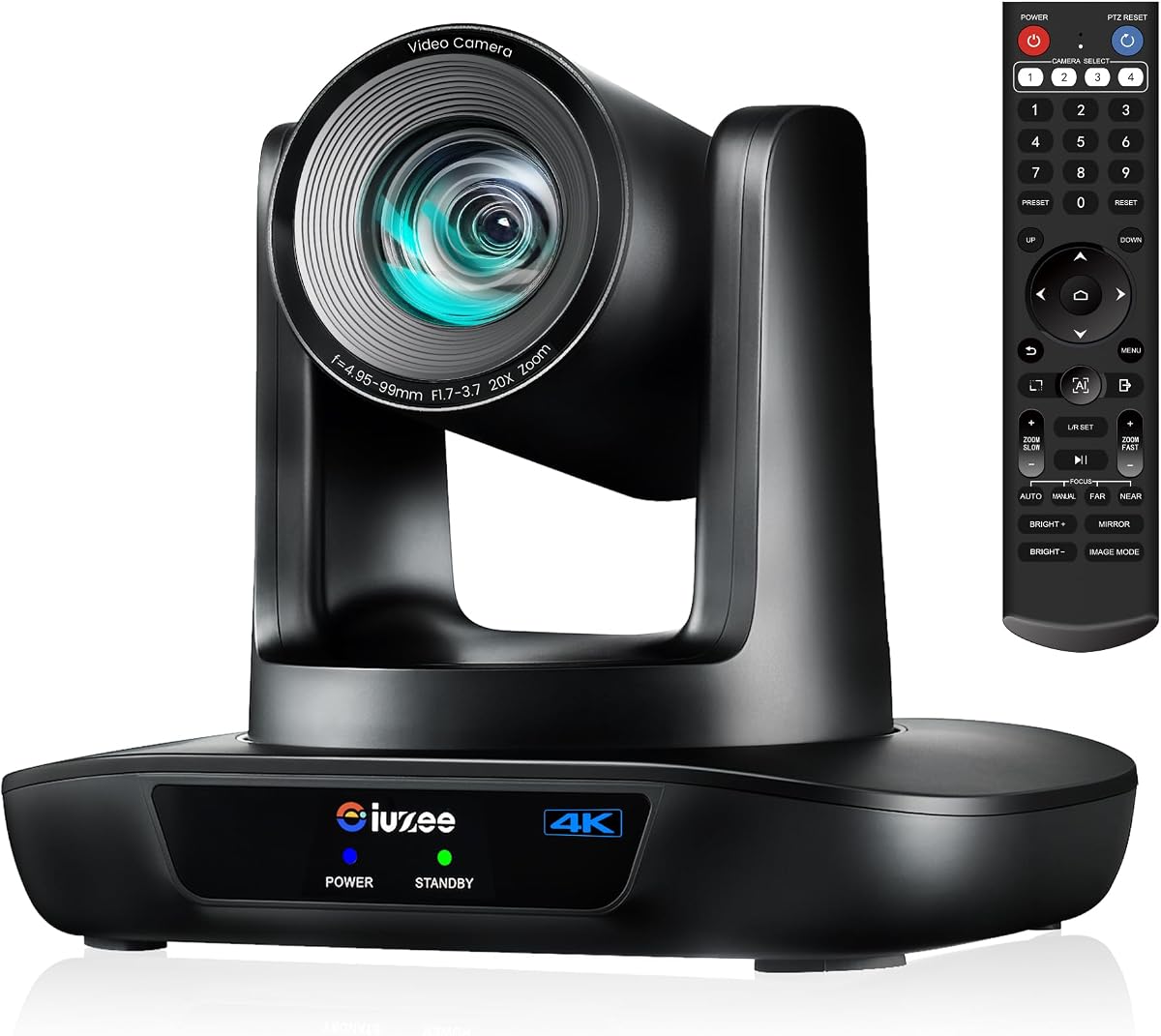
This system stands out with its 20x optical zoom, ideal for capturing clear details from the back of large churches or auditoriums. PoE support simplifies cabling by delivering power and data over a single Ethernet connection.
We may earn a commission when you buy through this link, at no additional cost to you.
AI auto tracking ensures that even presenters at a distance remain the focal point of the broadcast. The included Bluetooth speakerphone handles audio needs for mid-sized meetings without requiring extra microphones.
The extensive zoom range might be unnecessary for compact meeting rooms, potentially increasing costs without added value. Users should assess their room size carefully before committing to this powerful configuration.
Institutions like churches or large corporate halls benefit most from these capabilities. Its streaming compatibility makes it suitable for events that require professional-grade visual fidelity.
High optical magnification allows distant speakers to appear close-up without losing image sharpness or detail.
Power over Ethernet reduces wire clutter, making installation in ceiling mounts or high placements significantly easier.
We may earn a commission when you buy through this link, at no additional cost to you.
Designed for professional broadcasting, this camera delivers stunning 4K video with three simultaneous outputs for flexibility. It lacks a built-in microphone, so users must pair it with an external audio system for sound.
We may earn a commission when you buy through this link, at no additional cost to you.
Advanced 2D and 3D noise reduction technologies enhance image clarity in challenging lighting conditions. The 20x optical zoom and PoE support make it versatile for both desktop and ceiling installations.
Without integrated audio, the setup requires additional planning for microphones. However, for dedicated production teams, this separation often allows for higher quality audio mixing and control during live events.
Broadcasters or tech-savvy event organizers will appreciate its robust feature set. The web-based control interface adds convenience for managing camera settings remotely without needing separate software.
USB, HDMI, and LAN outputs allow simultaneous streaming and recording, maximizing production versatility.
Support for hundreds of presets enables complex event sequences, triggered quickly via remote or web interface.
We may earn a commission when you buy through this link, at no additional cost to you.
This model targets professional productions with its official NDI license and SDI output capabilities. The SDI port allows for signal transmission up to 300 feet without extra hardware, perfect for large venues or studios.
We may earn a commission when you buy through this link, at no additional cost to you.
Tracking resumes quickly if a subject's body is blocked, relying on facial recognition to maintain focus. NDI compatibility simplifies workflows in software like vMix and OBS, allowing efficient network-based control.
Complexity rises compared to standard USB cameras, requiring network configuration and NDI-aware software. Organizations with dedicated AV teams will manage this effortlessly, but casual users may find it challenging.
Studios, churches, and event centers with advanced streaming needs should consider this camera. It provides the tools required for high-level productions while maintaining ease of use for core functions.
NDI integration allows high-quality video transport over IP networks, enabling scalable and flexible setups.
SDI and HDMI ports provide industry-standard connectivity options suitable for broadcast switchers and long cables.
We may earn a commission when you buy through this link, at no additional cost to you.
Built for reliability, this camera ensures smooth PTZ performance during extended use. It lacks a dedicated speakerphone, so users must rely on their computer's audio system or external mics for sound.
We may earn a commission when you buy through this link, at no additional cost to you.
The 20x optical zoom provides significant reach, while multiple connection options like LAN and PoE offer installation flexibility. Web browser control simplifies adjustments without needing specialized desktop software.
Some users might need to tweak output resolutions for monitor compatibility, as detailed in the support notes. This minor step ensures optimal display quality across different setups and hardware configurations.
Education institutions or offices requiring consistent streaming performance will find it valuable. Its balanced feature set delivers high-quality visuals without overcomplicating the daily workflow.
Support for LAN, HDMI, and USB allows users to choose the best interface for their existing network infrastructure.
Control settings and presets directly from a web interface, saving time and effort for administrators.
We may earn a commission when you buy through this link, at no additional cost to you.
This all-in-one unit combines camera, microphones, and speakers to simplify large room setups. Its 4K resolution and 5x zoom ensure participants see every detail clearly, while auto framing adjusts dynamically as people move.
We may earn a commission when you buy through this link, at no additional cost to you.
The 4-mic array with noise reduction captures voices effectively across the room, and dual built-in speakers eliminate the need for extra audio hardware. This integration reduces clutter and potential connection issues significantly.
The device is larger than standalone webcams and might require a sturdy mounting solution. Additionally, the price point reflects its premium integration, making it more suited for well-funded organizations.
Large conference halls or training centers benefit from this comprehensive approach. It streamlines AV management, offering a professional-grade solution that minimizes troubleshooting during important business meetings.
Built-in speakers and mics reduce the need for separate devices, lowering setup time and maintenance costs.
AI adjusts the view to include all active participants, ensuring no one feels excluded from the conversation.
We may earn a commission when you buy through this link, at no additional cost to you.
A compact alternative for personal desks, this webcam integrates a speaker and mic for simple video calls. It uses AI voice tracking to focus on the active speaker, enhancing interaction during one-on-one meetings.
We may earn a commission when you buy through this link, at no additional cost to you.
Adjustable field of view modes let users switch between wide group views and narrow presentations. A privacy cover adds security, and the USB-only setup ensures no additional power source is needed.
The digital zoom may reduce clarity when magnifying distant objects compared to optical systems. Average ratings suggest some variability in performance, so users should test thoroughly upon arrival.
Home offices or individual workers needing a straightforward, clutter-free setup will appreciate this model. It balances essential features with affordability, making video conferencing accessible for smaller workspaces.
A compact footprint keeps desks tidy, while the built-in speaker removes the need for external audio devices.
Switching field of view modes helps frame meetings appropriately for both individual tasks and team sessions.
We may earn a commission when you buy through this link, at no additional cost to you.
Selecting the right auto tracking conference camera involves balancing resolution, tracking intelligence, and connectivity to match your specific meeting environment and technical requirements.
Resolution determines how sharp and detailed your video appears. Look for 4K support if your internet and monitors can handle it, or 1080P at 60fps for smoother motion. Higher frame rates reduce blur when speakers move rapidly, enhancing the viewing experience significantly.
Prioritize 4K for professional presentations where clarity is key. For standard meetings, high frame rate 1080P offers a cost-effective balance of motion fluidity and visual quality.
Tracking algorithms identify and follow speakers using facial or body recognition. Superior models adjust framing automatically without lag, keeping focus on presenters even if they move behind objects temporarily. Test how well the camera resumes tracking after occlusion.
Select systems with proven human recognition to avoid distracting jumps or loss of focus. Reliable tracking reduces manual effort and ensures a polished presentation flow for remote attendees.
Optical zoom maintains quality while magnifying distant subjects, unlike digital zoom which can pixelate the image. If your room is large or presenters move far from the lens, optical zoom is essential for clear visuals.
Check if the model supports at least 3x optical zoom for standard rooms. For larger spaces or studios, 20x optical zoom provides superior flexibility for capturing fine details without degradation.
A wider FOV captures more participants without needing multiple cameras. Most systems offer between 93 and 120 degrees, which suits small to medium huddle rooms. Larger meeting halls might benefit from adjustable or wide-angle lenses.
Ensure the FOV matches your room size to avoid cutting off people at the edges. Adjustable FOV options provide extra adaptability for varying group sizes and layouts.
Audio quality is just as critical as video. Look for models with built-in microphones or speakerphone kits that offer noise cancellation and full-duplex communication. External speakers might be needed for larger spaces to ensure remote participants hear everyone.
Choose systems that support Bluetooth or USB audio to simplify connections. Good microphone arrays reduce background noise, making conversations clearer and more professional.
USB plug-and-play setups are easiest for most offices, while HDMI offers higher video fidelity for TVs. Advanced users might prefer LAN or SDI for broadcast workflows. Check your network and software compatibility before purchasing.
PoE support simplifies installation by combining power and data. Ensure your infrastructure supports the required connectors to avoid buying extra adapters or cables later.
Consider how the camera will be mounted. Options include desk, tripod, wall, or ceiling. Ceiling mounts often provide better coverage, while desk mounts offer flexibility for smaller setups. Ensure the package includes necessary brackets.
Flexible mounting solutions allow you to optimize the camera angle. A versatile mount makes adjustments easy as room layouts change over time.
Ensure the camera works seamlessly with your primary conferencing tools like Zoom or Teams. Certification often guarantees better performance and fewer driver issues. Operating system support for Windows, Mac, or Linux is also vital.
Test the camera in your main software environment before full deployment. Certified devices typically integrate smoother and provide more consistent tracking performance.
Start by connecting the camera to your computer via USB or HDMI. Install any necessary software or drivers if they are not plug-and-play. Open your conferencing app and select the camera in the video settings to verify the connection.
Position the camera centrally so the lens has a clear view of the meeting area. Avoid placing it too high or too low. Adjust the zoom and field of view settings to ensure all participants fit comfortably within the frame.
Keep the lens clean with a soft microfiber cloth to maintain image quality. Protect the device from direct sunlight or heat sources that might damage components. Regularly update firmware to ensure optimal performance and security features.
Most modern auto tracking cameras include low-light correction to function well in dim rooms. However, adding soft overhead lighting improves tracking accuracy and video clarity. Avoid strong backlighting that silhouettes speakers against bright windows.
Yes, many models support OBS and YouTube for live streaming. Look for HDMI or IP outputs to integrate with streaming software. Advanced options like NDI offer professional streaming capabilities for larger productions.
Updates are usually done through the camera's web interface or manufacturer software. Connect the camera to a network and log in using default credentials. Follow the on-screen prompts to download and install the latest firmware version.
Not always; many kits include a Bluetooth speakerphone with built-in mics. Larger rooms may still benefit from external microphones to reduce echo. Check the audio range of the unit to ensure it covers your space adequately.
Optical zoom uses lenses to magnify images without losing quality. Digital zoom crops and enlarges the image, which can pixelate. For clear distant views, always prioritize optical zoom capabilities in your purchase decision.
Basic systems often follow a single speaker at a time. Some advanced models support multi-human tracking to frame entire groups. Check the product specs to confirm if it tracks individuals or auto-frames the whole room.
Most models support macOS via USB UVC drivers without needing installation. Ensure the software requirements state OS 10.10 or higher. Always verify compatibility before purchasing if you run a Mac-specific setup.
Yes, many cameras offer web browser or remote control options. You can adjust tilt, pan, and zoom remotely from a connected device. Some support joystick controllers for complex setups requiring precise manual movements.
Our top picks highlight models that balance tracking precision, video quality, and audio clarity. The TONGVEO 4K System leads with high resolution and smart AI, while the Zoom Certified Webcam offers a budget-friendly entry point for smaller teams.
For professional productions, the TONGVEO 4K NDI camera delivers broadcast-grade features like SDI output and NDI licensing. Consider your room size and technical needs before committing to ensure the system scales with your organization.
Prices and availability change frequently, so check current listings to confirm the latest details. Investing in the right camera now can transform how your team collaborates and presents remotely in the future.