
msi GT 1030 4GB
4.5Editor score
4GB DDR4 memory
Low profile design
DirectX 12 support
This guide compares the best GPU for Optiplex systems to help you choose the right graphics card for your small form factor workstation or gaming PC in October
Choosing the right GPU for Optiplex systems requires careful consideration of size, power, and performance. Many Optiplex models use small form factor cases that limit card dimensions and power delivery. Finding a compatible graphics card ensures you maximize your workstation or gaming potential without hardware conflicts.
We evaluated ten top graphics cards based on form factor, architecture, memory, and connectivity. Our analysis covers low-profile designs, power efficiency, and software compatibility for professional and gaming workloads. Each product was selected to fit common Dell Optiplex configurations while delivering reliable performance.
Each pick in this guide highlights key features, pros, and cons to help you make an informed decision. Prices and availability can change frequently, so verify current details before purchasing. Use this resource to find the ideal GPU that balances performance with your specific Optiplex hardware constraints.
4.5Editor score

4.7Editor score

4.3Editor score
This side-by-side comparison highlights the key specifications and strengths of each GPU to help you identify the best fit for your Optiplex system requirements.
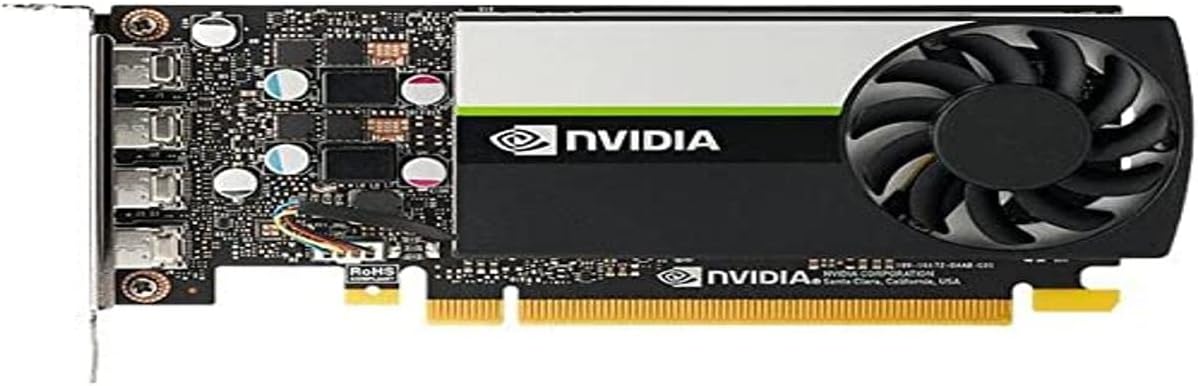


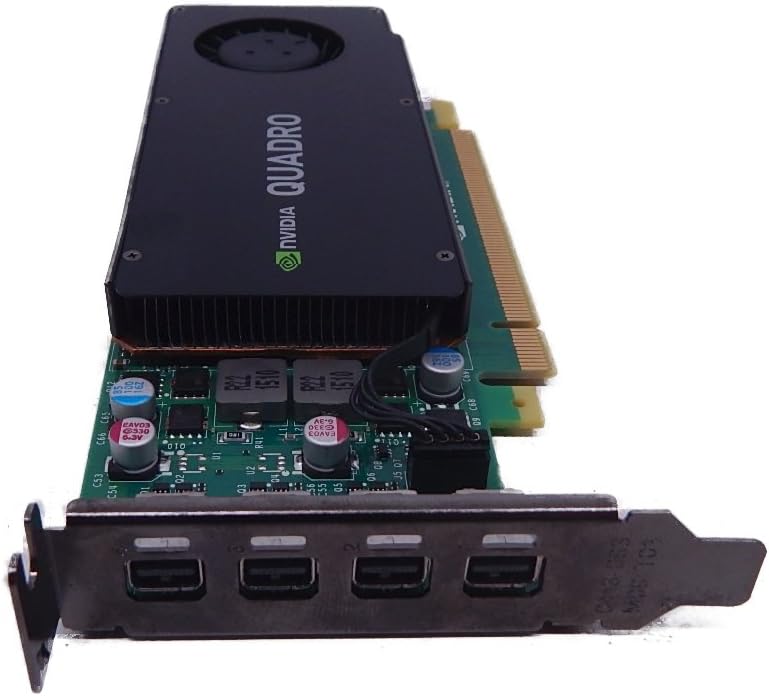
The PNY RTX A400 stands out as an excellent professional GPU for compact Optiplex systems. With a 4.7 rating, it delivers reliable performance for business workloads and design tasks. Its single slot low profile design fits seamlessly into small form factor cases.
We may earn a commission when you buy through this link, at no additional cost to you.
Powered by Ampere architecture, this card offers 768 CUDA cores and 4GB GDDR6 memory for efficient multitasking. It supports four Mini DisplayPort outputs, enabling multi-monitor setups ideal for productivity. The 50W power draw ensures compatibility with lower wattage power supplies.
While it excels in professional apps, gaming performance is limited compared to dedicated gaming cards. The price reflects its workstation-grade features and certification. These trade-offs are acceptable for users prioritizing stability and precision over raw frame rates.
Buyers seeking a reliable upgrade for Optiplex workstations should consider this card. It balances performance with efficiency and compact design. Ensure your system supports PCIe 4.0 for optimal connectivity and bandwidth utilization.
Its single slot low profile form factor makes it ideal for Dell Optiplex SFF and micro towers without case modifications.
ISV certification ensures stable performance with industry-standard applications like AutoCAD and Adobe Creative Cloud.
We may earn a commission when you buy through this link, at no additional cost to you.
The maxsun GeForce RTX 3050 offers premium gaming features in a low profile package suited for Optiplex cases. Rated 4.3 stars, it combines Ampere architecture with DLSS support for enhanced gaming performance. Its slim design ensures it fits in compact chassis easily.
We may earn a commission when you buy through this link, at no additional cost to you.
With 6GB GDDR6 memory and PCIe 4.0 connectivity, this GPU handles demanding games and creative apps efficiently. HDMI 2.1 and DisplayPort 1.4a enable high resolution multi-monitor setups. The dual fan cooling maintains performance during extended use.
Power consumption is higher than some workstation cards, so check your PSU capacity. Port selection is limited compared to multi-display professional options. These limitations are reasonable given its gaming focus and compact form factor.
Gamers and content creators with Optiplex PCs will appreciate this card's balance. It brings modern features to small systems without requiring major hardware changes. Verify power supply readiness before installation.
DLSS technology boosts frame rates without compromising visual quality for smoother gameplay experiences.
Despite its low profile size, the GPU delivers strong performance for entry to mid-level gaming and productivity.
We may earn a commission when you buy through this link, at no additional cost to you.
The msi GT 1030 is a budget-friendly option perfect for basic GPU upgrades in Optiplex systems. With a 4.5 rating, it provides reliable display output and light gaming capabilities. Its single fan low profile design ensures compatibility with most small cases.
We may earn a commission when you buy through this link, at no additional cost to you.
Featuring 4GB DDR4 memory and DirectX 12 support, this card handles everyday tasks and media playback smoothly. The OC version offers slightly better clock speeds for improved responsiveness. HDMI and DisplayPort outputs allow dual monitor configurations.
DDR4 memory is slower than GDDR6, limiting heavy workloads and modern gaming. Performance is entry-level compared to newer RTX cards. However, these trade-offs align with its low cost and simplicity for casual users.
Users needing a simple display adapter or light gaming boost will find this card ideal. It requires no additional power connectors and installs easily. Check system BIOS settings for optimal compatibility.
This card provides the lowest cost way to add dedicated graphics to systems lacking integrated GPU performance.
No external power cables are needed, making it a true plug and play solution for most desktop PCs.
We may earn a commission when you buy through this link, at no additional cost to you.
The PNY T600 delivers reliable professional performance in a compact package suitable for Optiplex workstations. Rated 4.6, it offers stable output for CAD and design workloads. Its low profile card fits easily into small form factor chassis.
We may earn a commission when you buy through this link, at no additional cost to you.
Powered by Turing architecture, the T600 supports high resolution displays up to 5K. Dedicated video encode engines enable efficient media workflows. Compatibility with major software standards ensures smooth operation across applications.
Limited to 2GB GDDR5 memory, heavy multitasking or modern gaming may be restricted. The architecture is older compared to Ampere based options. These factors reflect its focus on stability over cutting-edge speed.
Professionals seeking dependable graphics for 3D visualization will value this card. It balances performance with power efficiency. Confirm your system supports DisplayPort 1.4 for best results.
Hardware encode and decode engines improve performance for video editing and streaming tasks.
Multiple DisplayPort outputs allow flexible multi-monitor setups for enhanced productivity.
We may earn a commission when you buy through this link, at no additional cost to you.
The ASUS Dual RTX 3050 provides strong gaming performance with durable construction for Optiplex setups. Rated 4.7, it features Axial-tech fans and IP5X dust resistance for long-term reliability. The OC edition delivers higher boost clocks for improved speeds.
We may earn a commission when you buy through this link, at no additional cost to you.
Equipped with 6GB GDDR6 memory and dual fans, it manages heat effectively during demanding tasks. The stainless steel bracket offers durability and corrosion resistance. This card supports modern ray tracing and AI features.
Its 2-slot design might not fit the smallest micro cases without clearance checks. Power requirements exceed some low-wattage PSUs. These considerations are typical for performance-oriented compact cards.
Gamers looking for a reliable upgrade in larger Optiplex cases should consider this option. It balances cooling, performance, and build quality. Ensure case compatibility before purchase.
Dual Axial-tech fans increase air pressure for better thermal management under load.
IP5X dust resistance protects internal components from particulate ingress over time.
We may earn a commission when you buy through this link, at no additional cost to you.
The GIGABYTE RTX 3050 offers balanced gaming and productivity performance for Optiplex systems. Rated 4.6, it includes WINDFORCE dual fan cooling for efficient heat dissipation. The OC edition provides higher clock speeds for better frame rates.
We may earn a commission when you buy through this link, at no additional cost to you.
With 6GB GDDR6 memory and Ampere architecture, this card supports ray tracing and AI upscaling. Its compact design fits many small cases while maintaining thermal performance. Connectors include HDMI and DisplayPort for versatile setups.
Availability varies by region and retailer. Power consumption may exceed some integrated system limits. These factors are minor given its strong feature set and performance.
Users wanting reliable gaming capability in a small form factor will appreciate this model. Verify PSU capacity and case dimensions. Check local stock before purchasing.
WINDFORCE fans deliver high static pressure for better cooling in compact enclosures.
DLSS and ray tracing enhance visual fidelity and performance in supported games and apps.
We may earn a commission when you buy through this link, at no additional cost to you.
The msi RTX 3050 LP delivers solid gaming performance in a compact low profile design for Optiplex cases. Rated 4.5, it features a single fan and OC boost for efficient operation. Its dual DisplayPort and HDMI outputs support multi-monitor setups.
We may earn a commission when you buy through this link, at no additional cost to you.
Equipped with 6GB GDDR6 memory, this card handles modern games and creative apps well. The Ampere architecture enables ray tracing and AI features. The single fan keeps noise levels low during typical use.
Single fan cooling may struggle under sustained heavy loads. Space constraints could affect airflow in some cases. These trade-offs are acceptable for users prioritizing size and simplicity.
Ideal for small form factor gaming builds, this card balances performance and size. Check system airflow and case clearance. Ensure your PSU meets power requirements.
Low profile form factor ensures compatibility with SFF and micro tower chassis.
Dual DP and HDMI ports allow flexible display configurations for productivity or gaming.
We may earn a commission when you buy through this link, at no additional cost to you.
The PNY Quadro K1200 is a budget professional GPU suitable for older Optiplex systems. Rated 4.4, it offers reliable display output and basic CAD capabilities. Its low profile card fits into small cases with ease.
We may earn a commission when you buy through this link, at no additional cost to you.
With four Mini DisplayPort connectors, it supports multiple 4K monitors for productivity. The card includes a 3-year warranty for added peace of mind. Low power draw ensures compatibility with basic power supplies.
PCIe 2.0 limits bandwidth compared to modern standards. Performance lags behind newer RTX and A-series GPUs. These limitations make it best suited for legacy or light use.
Users with older Optiplex models needing multi-display support will find this useful. Verify PCIe slot compatibility and system age. Consider newer models if available for better performance.
Four Mini DP outputs enable expansive workspace setups for office productivity.
A 3-year warranty covers defects and provides confidence in long-term usage.
We may earn a commission when you buy through this link, at no additional cost to you.
The NVIDIA Quadro P1000 offers professional-grade graphics performance for compact Optiplex workstations. Rated 4.5, it combines Pascal architecture with 4GB GDDR5 memory. Its low profile design fits well in small cases.
We may earn a commission when you buy through this link, at no additional cost to you.
Supporting up to four 4K displays, this card enhances productivity workflows. ISV certification ensures compatibility with professional applications. Low power consumption reduces thermal stress on small systems.
Pascal architecture is older than current Turing or Ampere standards. VRAM limits complex scene handling. These trade-offs are acceptable for entry-level professional users.
Professionals needing reliable multi-display and 3D support will appreciate this card. Verify BIOS and slot compatibility. Consider newer models for heavier workloads.
Four 4K outputs allow professionals to manage multiple design files simultaneously.
Certification with major vendors ensures stable performance for industry software.
We may earn a commission when you buy through this link, at no additional cost to you.
The NVIDIA Quadro K1200 DVI serves as a budget option for older Optiplex systems needing GPU upgrades. Rated 4.2, it provides basic display performance with 4GB GDDR5 memory. Its low profile design fits small cases comfortably.
We may earn a commission when you buy through this link, at no additional cost to you.
Featuring PCIe 2.0 and DVI output, this card supports legacy monitors and systems. The low power draw ensures compatibility with older power supplies. It offers stable performance for office tasks.
Modern software and gaming support is limited due to outdated architecture. Bandwidth restrictions affect performance. These limitations suit only legacy hardware needs.
Users with very old Optiplex models may find this card useful. Verify port and slot compatibility. Consider newer options for future-proofing.
Supports older systems and monitors with DVI interfaces for cost-effective upgrades.
Provides basic GPU capabilities for systems without integrated graphics.
We may earn a commission when you buy through this link, at no additional cost to you.
Selecting the right GPU for Optiplex systems requires attention to form factor, power, and compatibility. This guide outlines key factors to consider for an optimal upgrade.
Optiplex cases often use small form factor designs that limit card length and height. Low profile or single slot GPUs are typically required to fit without modifying the chassis. Measure your case's maximum dimensions before purchasing to avoid clearance issues.
Choose cards explicitly marked as low profile or compact to ensure physical compatibility with Optiplex towers.
Many Optiplex models come with low wattage power supplies that cannot support high power GPUs. Check your PSU's wattage and connector availability before buying a GPU that requires external power cables. Look for cards with 50W or less for plug-and-play compatibility.
Select GPUs that match your system's power delivery to prevent shutdowns or instability.
Most Optiplex systems have PCIe x16 slots, but older models might use PCIe 2.0 which limits bandwidth. Ensure the GPU supports your motherboard's PCIe version for optimal performance. Modern cards are backward compatible but may not reach full speed.
Verify your system's PCIe generation to match GPU specifications for best results.
VRAM capacity and type affect multitasking and rendering performance. GDDR6 offers better bandwidth than DDR4 or GDDR5. For professional tasks, 4GB or more is recommended to handle larger datasets smoothly.
Prioritize higher VRAM and faster memory types for demanding workflows.
Different GPUs offer various combinations of HDMI, DisplayPort, and DVI outputs. Match your monitor's inputs to avoid needing adapters. Multiple display support is essential for productivity setups requiring more than one screen.
Choose cards with sufficient ports for your monitor configuration to simplify setup.
Newer architectures like Ampere and Turing provide better performance and features like DLSS and ray tracing. ISV certification ensures stability for professional applications. Consider your primary workload to decide between gaming and workstation GPUs.
Select GPUs with architecture aligned to your software needs for better efficiency.
Compact GPUs rely on single or dual fans for cooling. Passive cooling is rare in modern cards. Check reviews for thermal performance to ensure the GPU won't throttle under load in confined cases.
Opt for models with proven thermal management for reliable performance in small enclosures.
Prices range widely from entry-level to premium workstation cards. Balance cost against performance and feature requirements. Entry cards suffice for basic display needs while premium models suit creative and engineering work.
Assess your budget against performance needs to find the best value option.
Begin by shutting down your Optiplex PC and disconnecting power. Open the case and locate the PCIe slot where the new GPU will install. Remove the rear bracket screws and gently insert the card into the slot until it clicks into place.
Secure the card with screws and reconnect any power cables if required. Close the case and power on the system. Install the latest drivers from NVIDIA or the manufacturer's website to enable full functionality and performance features.
Regularly clean dust from the GPU fans and case vents to maintain cooling efficiency. Monitor temperatures during demanding tasks to ensure stable operation. Keep your drivers updated to benefit from performance improvements and security patches.
Many Optiplex models come with low wattage power supplies that cannot support high performance GPUs requiring external power connectors. Choose GPUs with 50W or less for plug-and-play compatibility. Verify your PSU capacity before purchasing to avoid instability or shutdowns.
Low profile GPUs are designed to fit small form factor cases like most Optiplex models. However, case dimensions vary slightly, so measure maximum card length and height before purchasing. Always check your specific Optiplex model's compatibility list.
Yes, gaming GPUs can handle professional tasks but may lack ISV certification for stability in design software. Professional cards offer better driver support for CAD and 3D apps. Choose based on your primary workload and performance needs.
Newer Optiplex models support PCIe 4.0 while older ones may be limited to PCIe 2.0 or 3.0. Modern GPUs are backward compatible but may not reach full bandwidth on older slots. Check your motherboard specs for exact PCIe version support.
After installing the hardware, power on your PC and download the latest drivers from NVIDIA or the GPU manufacturer's website. Follow the installation wizard and restart your system to complete setup. Use GeForce Experience or NVIDIA Control Panel for settings.
Check that the card is properly seated in the PCIe slot and that all power connections are secure. Update your BIOS and ensure the system's display adapter setting is configured correctly. Reinstall drivers if the issue persists.
Choosing the best GPU for Optiplex systems involves balancing size, power, and performance. Our top picks cover a range from budget to premium options suitable for various needs. The PNY RTX A400 offers professional reliability, while the maxsun RTX 3050 brings gaming features.
Prioritize form factor compatibility and power requirements to ensure smooth installation. Match the GPU's capabilities to your primary workload for optimal results. Consider future needs like multi-display setups when selecting ports and memory.
Prices and availability can change quickly, so verify current details before buying. Use this guide as a reference to make an informed decision. Select the card that best fits your Optiplex model and performance goals.