
Entina Tina2C
4.4Editor score
Ready in eight minutes
STEM learning modules included
Compact desktop footprint
This guide compares the top 3D printer for educational use models featuring auto leveling, safety, and speed for classrooms and STEM learning projects.
Choosing the right 3D printer for educational use requires balancing safety, ease of use, and print quality. Schools and home learners need machines that start quickly without constant calibration to maximize learning time.
We evaluated ten leading models based on setup time, safety certifications, build volume, and software accessibility. Our analysis focuses on reliability and support for STEM curricula across various age groups.
Each pick highlights unique strengths like enclosed chambers or app controls. Remember that prices change frequently so verify current deals before purchasing to ensure you get the best value for your budget.
4.4Editor score

4.7Editor score

4.6Editor score
This table compares key specifications across all ten selected models to help you identify the best fit for your specific classroom or home lab requirements and constraints.



The Bambu Lab A1 stands out as a top choice for educational settings due to its reliable performance and minimal setup requirements. It carries a high rating from users who value precision and speed in their learning projects.
We may earn a commission when you buy through this link, at no additional cost to you.
Its standout feature is the full-auto calibration that removes the guesswork for students learning 3D printing basics. Active flow rate compensation ensures smooth prints even at high speeds, making it ideal for rapid prototyping in classrooms.
While the standard unit is single color, adding the AMS lite allows for multi-color projects which greatly enhances creativity. The noise cancellation keeps the environment quiet enough for focused study areas without distraction.
Educators and parents seeking a printer that combines ease of use with professional results should consider this model. It reduces technical barriers so students can focus on design and engineering concepts rather than machine maintenance.
The automatic calibration routine handles Z-offset and bed leveling instantly so learners can start printing within minutes of setup.
With the optional AMS lite, students can explore complex color patterns and layered designs that inspire advanced creative thinking.
We may earn a commission when you buy through this link, at no additional cost to you.
The Entina Tina2C is designed specifically for kids and beginners who need a quick and frustration-free introduction to 3D printing. Its fully assembled design means no complex setup time before learning begins.
We may earn a commission when you buy through this link, at no additional cost to you.
This model includes over 3000 models and 20 creative DIY modules that align with STEM educational goals. The app control allows teachers to manage prints remotely without needing to be right next to the machine.
While the build volume is small, it is perfect for classroom demonstrations and small individual projects where space is limited. The auto leveling ensures consistent results even for inexperienced users handling the first print.
Budget-conscious schools or families wanting a dedicated printer for children will find this device offers excellent value. It removes technical barriers so young learners can focus on creativity and design thinking.
Interactive STEM courses and DIY modules guide students through engineering concepts while they create tangible 3D printed objects.
Teachers can monitor and control prints via the app which reduces supervision needs and allows for smoother classroom workflow.
We may earn a commission when you buy through this link, at no additional cost to you.
The Ugee Funbox represents the pinnacle of safety and ease of use for educational 3D printing. It is UL GREENGUARD certified ensuring clean air and safe materials for classroom or home environments.
We may earn a commission when you buy through this link, at no additional cost to you.
Its most impressive feature is the AI powered creation engine that lets kids turn drawings or photos into printable models instantly. This sparks creativity by removing the need for advanced 3D modeling skills.
The fully enclosed body with anti-pinch doors and cool-touch exterior protects young hands during operation. A built-in camera streams live progress to phones allowing families to share the making of journey easily.
For schools prioritizing safety and engagement, this model justifies the premium cost with its robust feature set. It transforms screen time into hands-on making while maintaining high standards for environmental and physical safety.
Text or photo input converts to 3D models instantly so children can visualize ideas without complex software training.
Enclosed design and certified materials ensure a safe experience for young learners in shared spaces.
We may earn a commission when you buy through this link, at no additional cost to you.
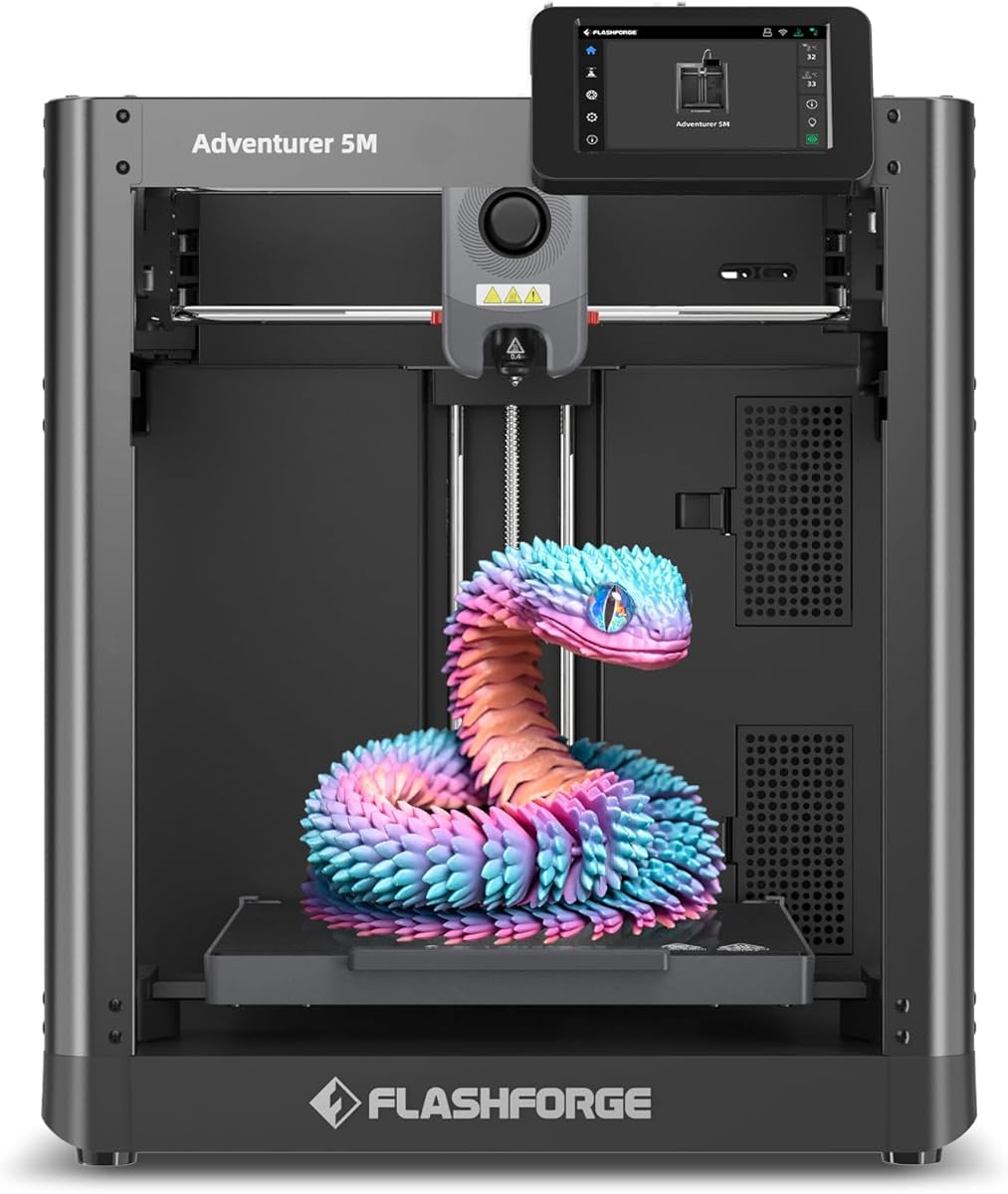
The FLASHFORGE Adventurer 5M offers a compelling mix of speed and value for educational environments that need high throughput. Its CoreXY all-metal structure supports high speed printing while maintaining stability.
We may earn a commission when you buy through this link, at no additional cost to you.
Features like one-click automatic leveling and a 3-second detachable nozzle make maintenance and setup quick for busy teachers. This design ensures students spend more time creating and less time troubleshooting.
While the open design is great for PLA and PETG it may struggle with materials requiring enclosed temperatures like ABS. For general classroom use this limitation is minor given the speed and ease of operation.
Schools looking for a workhorse printer that handles multiple projects quickly will appreciate this machine. It balances performance with affordability making it a solid option for STEM labs needing reliable daily use.
High speeds and acceleration reduce wait times so students can iterate designs faster during lab sessions.
Quick swap nozzle and auto leveling minimize downtime when changing materials or cleaning the printer.
We may earn a commission when you buy through this link, at no additional cost to you.
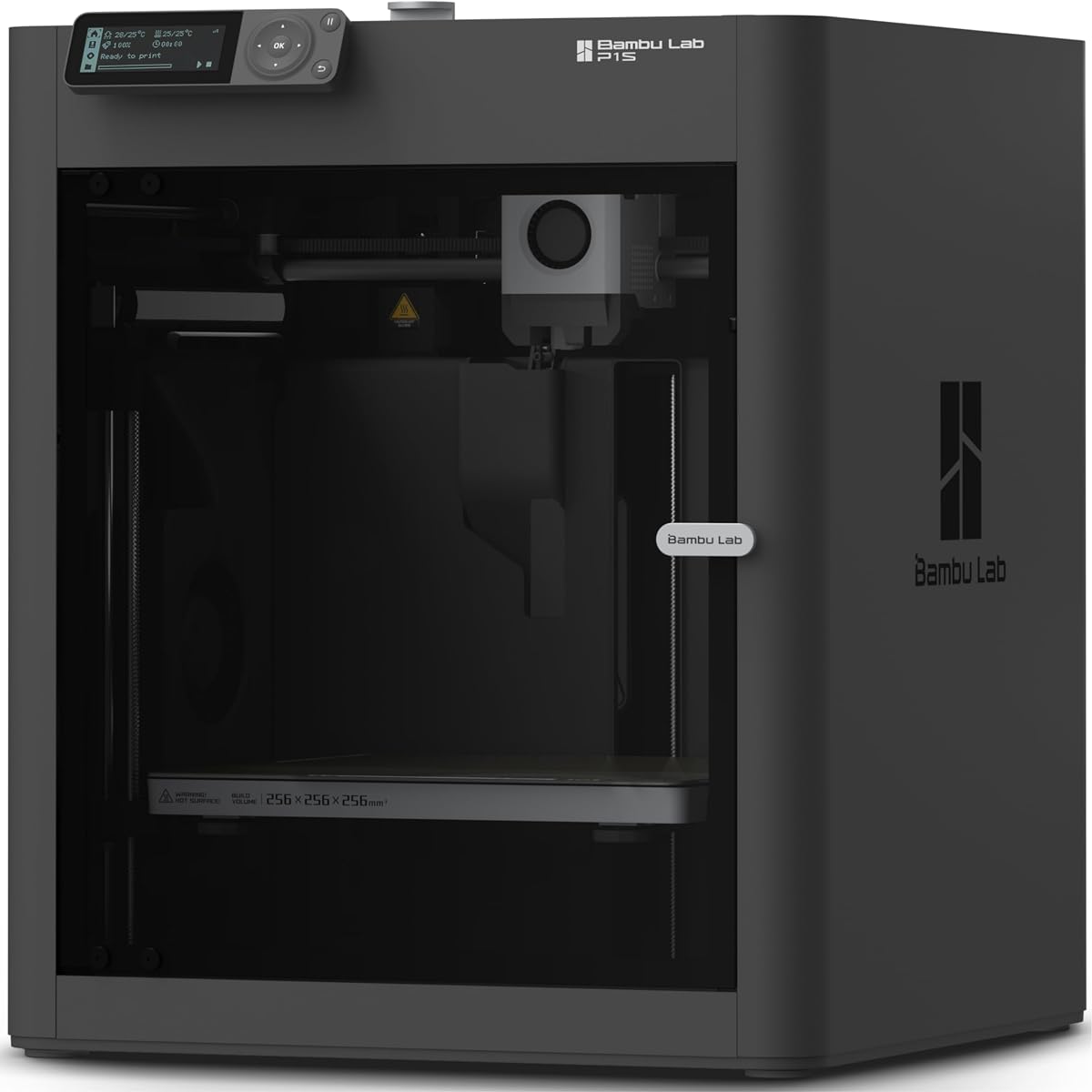
The Bambu Lab P1S brings high end performance and reliability to educational settings with its fully enclosed design. It supports advanced materials like ASA which is useful for outdoor projects and engineering lessons.
We may earn a commission when you buy through this link, at no additional cost to you.
With auto bed leveling and a quick setup time it is ready to teach within minutes. The speed ensures that prototypes turn quickly keeping student momentum going during short class periods.
While the initial investment is higher the ability to print with stronger materials adds value to curriculum. It handles tricky filaments well which can be limiting when using other printers in school labs.
For departments that require versatility and durability this model is a smart investment. It balances ease of use with robust capabilities making it suitable for diverse educational projects.
Enclosed chamber enables printing of engineering materials that require higher temperatures for successful parts.
Setup is streamlined so educators can start teaching 3D printing concepts immediately without delays.
We may earn a commission when you buy through this link, at no additional cost to you.
The FLASHFORGE AD5M delivers high performance at an accessible price making it ideal for schools with multiple units. Its all-metal CoreXY structure ensures stability even during high-speed printing sessions.
We may earn a commission when you buy through this link, at no additional cost to you.
Automatic calibration and power loss recovery help prevent failed prints and material waste. This is crucial for educational budgets where efficiency and reliability are key factors in success.
While it lacks some advanced connectivity features found in premium models it performs the core printing tasks reliably. Students can focus on design and engineering concepts without machine interruptions.
Budget-conscious buyers looking for speed and reliability will find this model compelling. It offers a robust platform for learning 3D printing principles without excessive cost overhead.
Power loss recovery and auto calibration minimize waste and frustration during long print jobs.
All-metal build ensures precise movement and durability for high school lab environments.
We may earn a commission when you buy through this link, at no additional cost to you.
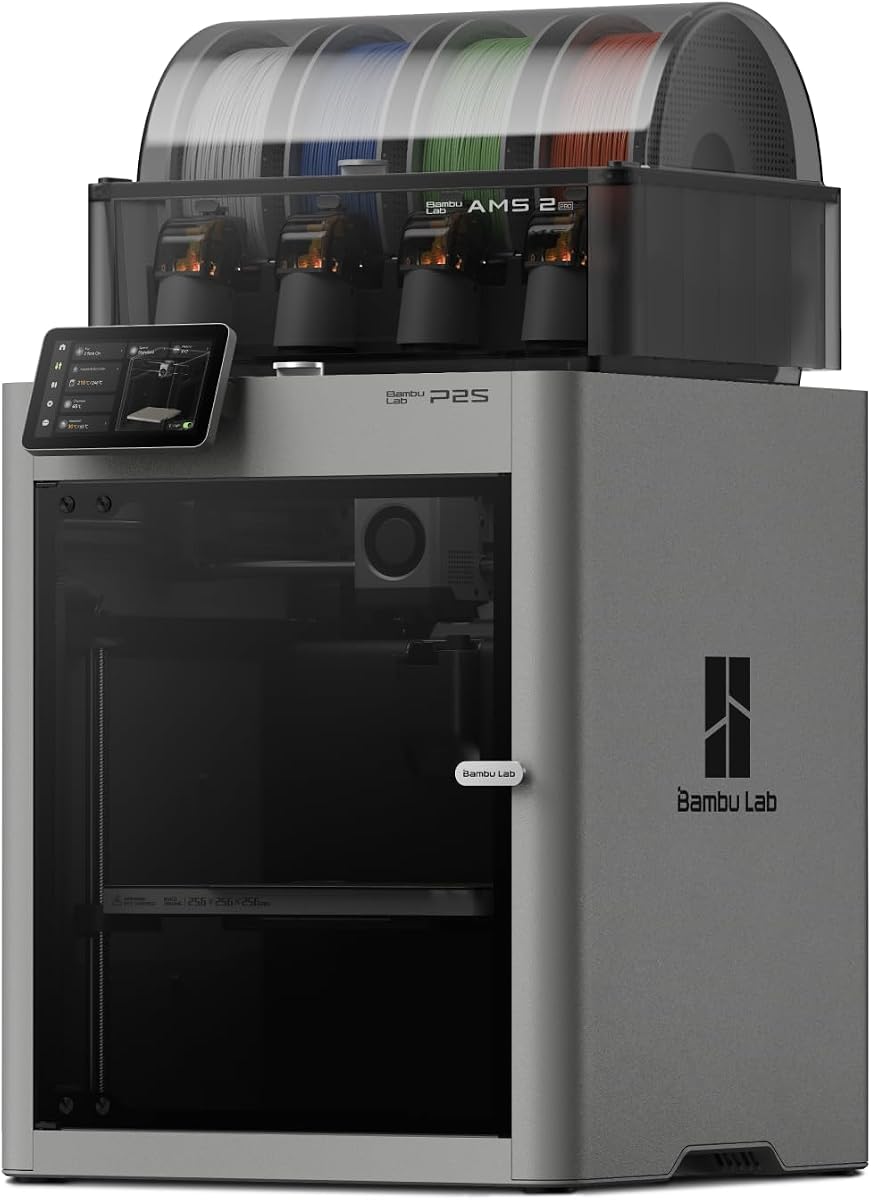
The Bambu Lab P2S Combo provides a complete multi-color printing experience ideal for advanced educational projects. It includes the AMS 2 Pro which enables vibrant prints without extra purchases.
We may earn a commission when you buy through this link, at no additional cost to you.
Features like adaptive airflow and filament drying ensure consistent results across different materials. This reliability is essential for teaching engineering principles where part strength matters.
While the cost is high it justifies itself for institutions needing to produce high-quality prototypes or marketing materials. The speed and automation save staff time allowing more focus on curriculum.
Schools with larger budgets wanting top tier capabilities should consider this model. It sets a professional standard for 3D printing labs capable of diverse and complex tasks.
Integrated AMS allows students to explore color theory and assembly in a single workflow.
Filament drying ensures moisture sensitive materials print correctly for engineering applications.
We may earn a commission when you buy through this link, at no additional cost to you.
This variant of the Adventurer 5M brings refined features for educational needs like better heat management and power recovery. It ensures reliability during long printing sessions typical in workshops.
We may earn a commission when you buy through this link, at no additional cost to you.
The direct extruder handles a range of filaments well while the auto leveling reduces setup errors for students. This simplicity helps maintain momentum in learning without constant technical intervention.
While it does not support high temperature engineering materials as well as enclosed models it excels for general purpose use. The flexible PEI plate makes removing prints easy preventing breakage.
Educators needing a reliable machine for standard PLA and PETG prints will find this suitable. It balances performance and ease of use effectively for classroom demonstrations.
Power loss recovery ensures students do not lose progress during unexpected power interruptions.
Upgraded extruder delivers consistent flow for high-quality parts and smooth surfaces.
We may earn a commission when you buy through this link, at no additional cost to you.
The Snapmaker U1 stands out for its unique tool-changing system that enables true multi-material and multi-color printing. This makes it ideal for advanced labs exploring flexible and rigid material combinations.
We may earn a commission when you buy through this link, at no additional cost to you.
Its fast 5-second tool changer reduces waste and time compared to traditional systems. This efficiency supports rapid iteration and complex assembly projects in STEM curricula.
The machine includes built-in calibration and a robust motion system ensuring accurate prints. This reliability allows students to focus on design rather than debugging machine issues.
For schools teaching advanced manufacturing concepts this printer offers a professional-grade experience. It bridges the gap between hobbyist machines and industrial capabilities effectively.
Four toolheads allow simultaneous printing of supports and parts with different properties.
Quick tool swaps mean less downtime and faster completion of complex models.
We may earn a commission when you buy through this link, at no additional cost to you.
The Bambu Lab A1 Mini Combo combines speed and automation in a compact form factor. It is perfect for individual student desks or limited classroom spaces where size is a constraint.
We may earn a commission when you buy through this link, at no additional cost to you.
Including the AMS lite right out of the box offers multi-color possibilities without extra cost. This encourages creative exploration with different materials early in the learning process.
While the volume is smaller it covers most educational needs perfectly. Students can learn design principles without needing large scale parts for every project.
For environments needing multiple stations or limited space this model is an excellent choice. It delivers professional performance in a package that fits anywhere.
Compact size allows for multiple units in one room without cluttering the workspace.
Included AMS lite enables multi-color learning without hidden hardware expenses.
We may earn a commission when you buy through this link, at no additional cost to you.
Selecting the right machine involves considering safety, speed, and ease of use for your specific audience. This section breaks down the critical factors to evaluate.
Safety is the top priority when choosing a 3D printer for educational use. Fully enclosed printers reduce the risk of burns and contain any potential fumes or particles better than open-frame models.
Look for certifications like UL GREENGUARD which ensure low emissions and safe operation in indoor classrooms. This feature is essential for environments with young students or sensitive air quality needs.
Educators often lack technical support so printers that require minimal calibration are ideal. Auto-leveling and one-touch setup features save time and reduce frustration for students.
Choose models that allow you to start printing within minutes of unboxing. This ensures that lesson plans are not delayed by technical troubleshooting or complex assembly.
Fast print speeds are crucial for educational settings where time is limited. High acceleration and travel speeds mean students can see their designs come to life quickly.
A machine capable of rapid prototyping supports iterative learning. It allows for quick corrections and multiple tries during a single class session.
Consider the size of the parts your students typically create. A standard 220mm build volume covers most educational needs but larger projects might require more space.
Smaller units are great for individual desks while larger ones suit lab environments. Balance the physical space available with the scale of your curriculum projects.
User-friendly software and reliable connectivity make classroom management easier. App control and remote monitoring allow teachers to supervise prints from a distance.
Look for compatibility with educational platforms like Cura or Simplify3D. Cloud features can help organize files and share designs across a class efficiently.
A printer that supports various filament types offers more creative freedom. PLA is standard but PETG and TPU add strength and flexibility to projects.
Ensure the machine can handle the materials you plan to teach. Enclosed models are better for high-temperature filaments like ABS which might be needed for engineering lessons.
Low maintenance machines reduce the burden on staff. Features like quick-swap nozzles and self-cleaning systems help keep printers running smoothly.
Invest in models that are easy to repair or clean. This ensures longevity and reliability throughout the school year without constant intervention.
Evaluate the total cost of ownership including spare parts and accessories. Reliable customer support is vital when something goes wrong during class time.
Budget models may save money upfront but premium units often offer better long-term value. Balance your financial constraints with the need for durability.
Before starting a print, ensure the bed is clean and the nozzle is free of debris. Most modern educational printers come with auto-leveling features that simplify this process significantly.
Keep the filament dry and stored properly to prevent printing issues. Using a dry box or dehumidified container can improve print quality and reduce waste during projects.
Regularly clean the build plate and check for loose screws or worn parts. Maintaining your machine ensures consistent results and extends its life in a busy educational environment.
Yes, many models designed for educational use include safety features like enclosed bodies and cool-touch exteriors. Look for safety certifications and ensure proper supervision during operation for younger children.
Most modern machines come with user-friendly apps or simplified interfaces. These tools streamline slicing and printing so students can focus on design rather than complex technical settings.
Print times vary by size and speed settings. Small models might finish in under thirty minutes while larger or complex designs can take several hours depending on the printer.
Routine maintenance includes cleaning the bed, checking for loose parts, and replacing nozzles as needed. Most schools perform these tasks on a monthly basis to ensure reliable operation.
Yes, certain advanced models support multi-material printing using multiple toolheads or AMS units. This allows for creating parts with different strengths or colors in a single print.
PLA is the safest and easiest option for most educational needs due to low odor and simple melting. PETG and TPU are also popular for projects requiring extra strength or flexibility.
Our top recommendations balance speed, safety, and ease of use to suit a variety of educational environments. The Bambu Lab A1 offers reliability while the Ugee Funbox brings unmatched safety features for younger learners.
When choosing a machine prioritize features that align with your curriculum goals. Safety certifications, auto-leveling, and fast printing capabilities should be key factors in your decision-making process.
Remember that prices and promotions change frequently so check current listings before buying. Verify the warranty and support options to ensure you have reliable assistance when needed.